
Verwandte Artikel zu Faith: A Novel
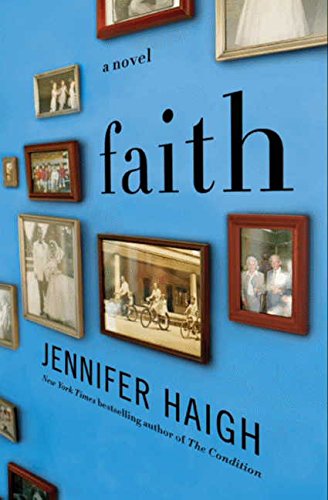
Inhaltsangabe
"[Haigh is] an expertnatural storyteller with an acute sense of her characters' humanity." —NewYork Times
"We have the intriguing possibility that the nextgreat American author is already in print." —Fort Worth Star-Telegram
When Sheila McGann setsout to redeem her disgraced brother, a once-beloved Catholic priest in suburbanBoston, her quest will force her to confront cataclysmic truths about herfractured Irish-American family, her beliefs, and, ultimately, herself.Award-winning author Jennifer Haigh follows hercritically acclaimed novels Mrs. Kimbleand The Condition with a captivating,vividly rendered portrait of fraying family ties, and the trials of belief anddevotion, in Faith.
Die Inhaltsangabe kann sich auf eine andere Ausgabe dieses Titels beziehen.
Über die Autorin bzw. den Autor
Jennifer Haigh is the author of the short-story collection News from Heaven and six bestselling and critically acclaimed novels, including Mrs. Kimble, Faith and Heat and Light, which was named a Best Book of 2016 by the New York Times, The Washington Post, the Wall Street Journal and NPR. Her books have won the PEN/Hemingway Award, the Massachusetts Book Award and the PEN New England Award in Fiction, and have been translated widely. She lives in New England.
Von der hinteren Coverseite
It is the spring of 2002 and a perfect storm has hit Boston. Across the city's archdiocese, trusted priests have been accused of the worst possible betrayal of the souls in their care. In Faith, Jennifer Haigh explores the fallout for one devout family, the McGanns.
Estranged for years from her difficult and demanding relatives, Sheila McGann has remained close to her older brother Art, the popular, dynamic pastor of a large suburban parish. When Art finds himself at the center of the maelstrom, Sheila returns to Boston, ready to fight for him and his reputation. What she discovers is more complicated than she imagined. Her strict, lace-curtain-Irish mother is living in a state of angry denial. Sheila's younger brother Mike, to her horror, has already convicted his brother in his heart. But most disturbing of all is Art himself, who persistently dodges Sheila's questions and refuses to defend himself.
As the scandal forces long-buried secrets to surface, Faith explores the corrosive consequences of one family's history of silence—and the resilience its members ultimately find in forgiveness. Throughout, Haigh demonstrates how the truth can shatter our deepest beliefs—and restore them. A gripping, suspenseful tale of one woman's quest for the truth, Faith is a haunting meditation on loyalty and family, doubt and belief. Elegantly crafted, sharply observed, this is Jennifer Haigh's most ambitious novel to date.
Auszug. © Genehmigter Nachdruck. Alle Rechte vorbehalten.
Faith
A NovelBy Jennifer HaighHarperCollins
Copyright © 2011 Jennifer HaighAll right reserved.
ISBN: 978-0-06-075580-5
Chapter One
Here is a story my mother has never told me.
It is a day she?s relived a thousand times, the twenty-first
of June, 1951, the longest day of that or any year. A day that still
hasn?t ended, as some part of her still paces that dark apartment in
Jamaica Plain, waiting. I imagine the curtains closed against the
five o?clock sun, hot and bright as midday; her baby boy peacefully
asleep; her young self with nothing to do but wander from
room to room, still filled with her dead mother-in-law?s things.
At the time she?d thought it a grand apartment, her from Roxbury
where the children slept three to a bed. Even as a boy her
husband had had his own bedroom, an unimaginable luxury. His
mother had been injured somehow giving birth and there had
been no more children. This fact alone made the Breens wealthier
than most, though Harry?s father had only worked at Filene?s
stacking crates in the warehouse. The entire apartment had come
from Filene?s, on the employee discount, the lamps and brocade
divan and what she had learned were called Oriental rugs. Mary
herself had never bought a thing at Filene?s. Her own mother
shopped at Sears.
In the bedroom the baby slept deeply. She parted the curtains
and let the sun shine on his face. Harry, when he came home,
would pull them shut, worried someone might see him dressing
or undressing through their third-floor windows. Sure, it was
possible?the windows faced Pond Street, also lined with three-
deckers?though why he cared was a puzzle. He was a man, after
all. And there was nothing wrong with the sight of him. The first
morning of their marriage, lying in the too-soft bed in the tourist
cabin in Wellfleet, she had looked up at him in wonderment, her
first time seeing him in daylight, his bare chest and shoulders, and
her already four months along. Nothing wrong with him at all,
her husband tall and blue-eyed, with shiny dark hair that fell into
his eyes when he ducked his head, a habit left over from a bashful
adolescence, though nobody, now, would call him shy. Harry
Breen could talk to anyone. Behind the counter at Old Colony
Hardware he had a way with the customers, got them going about
their clogged pipes and screen doors and cabinets they were
installing. He complimented their plans, suggested small improvements,
sent them out the door with twice what they?d come in
for. A natural salesman, never mind that he couldn?t, himself, hit
a nail with a hammer. When a fuse blew at the apartment it was
Mary who ventured into the dark basement with a flashlight.
What did you do before? she?d asked, half astonished, when she
returned to the lit apartment and found Harry and his mother sitting
placidly in the kitchen, stirring sugar into teacups.
We didn?t burn so many lights before, the old lady said.
It was a reminder among many others that Mary?s presence
was unwelcome, that Mrs. Breen, at least, had not invited her
into their lives, this grimy interloper with her swollen belly and
her skirts and blouses from Sears. As though her condition were a
mystery on the order of the Virgin Birth, as though Harry Breen
had had nothing to do with it.
She lifted Arthur from his crib and gave his bottom a pat.
He wriggled, squealed, fumbled blindly for her breast. The sodden
diaper would have to be changed, the baby fed. In this way
minutes would pass, and finally an hour. The stubborn sun would
begin its grudging descent. Across town, in Roxbury, girls would
be dressing for the dances, Clare Boyle and her sister and whoever
else they ran with now, setting out by twos and threes down the
hill to Dudley Street.
She finished with the diaper, then sat at the window and
unbuttoned her blouse, aware of the open curtains. If Harry came
upon her like this, her swollen breast exposed, what would he
do then? The thought was thrilling in a way she couldn?t have
explained. But it was after six, and still there was no sign of him.
When his mother was alive he?d come straight home after work.
You could set your watch by it, his footsteps on the stairs at five
thirty exactly, even on Fridays when the other men stopped at the
pub for a taste. Lately, though, his habits had shifted. Mondays
and Tuesdays he played cards at the Vets.
Once, leaving church, he?d nodded to some men she didn?t
recognize, a short one and a tall one sharing a cigarette on the
sidewalk. See you tomorrow, then, Harry called in a friendly tone.
The short man had muttered under his breath, and the tall one
had guffawed loudly. To Mary it couldn?t have been plainer that
they were not Harry?s friends.
They?d met the way everyone met, at the dances. Last summer
the Intercolonial was the place to be; now it might be the Hibernian-
or the Winslow or the Rose Croix for all she knew. On a
Saturday night, with Johnny Powell?s band playing, a thousand or
more would crowd upstairs at the Intercolonial, a mirrored globe
hanging from the ceiling so that the walls shivered with light.
She was seventeen then, too young for such pleasures. But it
had been easy enough to slip out on a Friday night with Ma
dead asleep, exhausted by the work of getting three small ones
bathed and in their beds. And it wasn?t even a lie to go dancing
on a Wednesday, when Mary really did attend the novena at
nine o?clock as she was supposed to, the church packed with other
overdressed girls and men who?d already had a drink or two,
who?d meet up later across the street at Fontaine?s Café and make
their plans for the evening. All right, then. See you at the hall. The
men were deep on Wednesdays; you could change partners all
night long if you wanted. Thursdays were a different story, maids?
night out, the halls packed with Irish girls. There was almost no
point in going on a Thursday, the numbers were so against you.
On a Thursday you were lucky to get a single dance.
Harry Breen hadn?t chosen her, not at first. That first time
they?d danced purely by chance. She knew all the dances?the reels
and jigs, the wild céilí. At the Intercolonial waltzes were the thing,
though once each night Johnny Powell would force the dreamy
couples apart. Line up, everybody, for the Siege of Ennis. A mad crush,
then, as they formed two long lines, men and girls facing. You?d
take your turn with every one, herself and Clare Boyle laughing
the whole way through. Some of the men were clumsy, some so
strong they?d nearly swing you off your feet.
She noticed Harry a moment before he reached for her. He
was taller than the rest, his movements liquid; he swung her
gracefully, smooth and controlled. And that thing she first felt,
that swooning joy: maybe it was simple geometry, the relative
size and shape of their bodies, his chest and shoulders just where
they should be, their hips meeting, her eyes level with his mouth.
The plain fact was that she?d chased him, courted his attention
Gone to greater lengths than any girl should. There was
no point, now, in being ashamed. She had a ring on her finger
and it hardly mattered how. They were married fast by her uncle
...
„Über diesen Titel“ kann sich auf eine andere Ausgabe dieses Titels beziehen.
Suchergebnisse für Faith: A Novel

Beispielbild für diese ISBN
Faith
Anbieter: World of Books (was SecondSale), Montgomery, IL, USA
Verkäuferbewertung 5 von 5 Sternen

Zustand: Good. Item in good condition. Textbooks may not include supplemental items i.e. CDs, access codes etc. Artikel-Nr. 00049484469
Gebraucht kaufen
EUR 3,82
Versand gratis
Versand innerhalb von USA
Versand innerhalb von USA
Anzahl: 6 verfügbar
Beispielbild für diese ISBN
Faith
Anbieter: World of Books (was SecondSale), Montgomery, IL, USA
Verkäuferbewertung 5 von 5 Sternen
Zustand: Very Good. Item in very good condition! Textbooks may not include supplemental items i.e. CDs, access codes etc. Artikel-Nr. 00102333454
Gebraucht kaufen
EUR 3,82
Versand gratis
Versand innerhalb von USA
Versand innerhalb von USA
Anzahl: 2 verfügbar
Beispielbild für diese ISBN
Faith: A Novel
Verlag:
Harper (edition First Edition), 2011
ISBN 10: 0060755806
ISBN 13: 9780060755805
Gebraucht
Hardcover
Erstausgabe
Anbieter: BooksRun, Philadelphia, PA, USA
Verkäuferbewertung 5 von 5 Sternen
Hardcover. Zustand: Very Good. First Edition. With dust jacket. It's a well-cared-for item that has seen limited use. The item may show minor signs of wear. All the text is legible, with all pages included. It may have slight markings and/or highlighting. Artikel-Nr. 0060755806-8-1-29
Gebraucht kaufen
EUR 5,29
Versand gratis
Versand innerhalb von USA
Versand innerhalb von USA
Anzahl: 1 verfügbar
Beispielbild für diese ISBN
Faith: A Novel
Verlag:
Harper (edition First Edition), 2011
ISBN 10: 0060755806
ISBN 13: 9780060755805
Gebraucht
Hardcover
Erstausgabe
Anbieter: BooksRun, Philadelphia, PA, USA
Verkäuferbewertung 5 von 5 Sternen
Hardcover. Zustand: Very Good. First Edition. With dust jacket. It's a well-cared-for item that has seen limited use. The item may show minor signs of wear. All the text is legible, with all pages included. It may have slight markings and/or highlighting. Artikel-Nr. 0060755806-11-18-29
Gebraucht kaufen
EUR 5,31
Versand gratis
Versand innerhalb von USA
Versand innerhalb von USA
Anzahl: 1 verfügbar
Beispielbild für diese ISBN
Faith : A Novel
Verlag:
HarperCollins Publishers, 2011
ISBN 10: 0060755806
ISBN 13: 9780060755805
Gebraucht
Hardcover
Anbieter: Better World Books, Mishawaka, IN, USA
Verkäuferbewertung 5 von 5 Sternen
Zustand: Very Good. Former library copy. Pages intact with possible writing/highlighting. Binding strong with minor wear. Dust jackets/supplements may not be included. Includes library markings. Stock photo provided. Product includes identifying sticker. Better World Books: Buy Books. Do Good. Artikel-Nr. 8824293-75
Gebraucht kaufen
EUR 6,33
Versand gratis
Versand innerhalb von USA
Versand innerhalb von USA
Anzahl: 1 verfügbar
Beispielbild für diese ISBN
Faith : A Novel
Verlag:
HarperCollins Publishers, 2011
ISBN 10: 0060755806
ISBN 13: 9780060755805
Gebraucht
Hardcover
Anbieter: Better World Books: West, Reno, NV, USA
Verkäuferbewertung 5 von 5 Sternen
Zustand: Very Good. Former library copy. Pages intact with possible writing/highlighting. Binding strong with minor wear. Dust jackets/supplements may not be included. Includes library markings. Stock photo provided. Product includes identifying sticker. Better World Books: Buy Books. Do Good. Artikel-Nr. 8824293-75
Gebraucht kaufen
EUR 6,33
Versand gratis
Versand innerhalb von USA
Versand innerhalb von USA
Anzahl: 1 verfügbar
Beispielbild für diese ISBN
Faith: A Novel
Anbieter: Wonder Book, Frederick, MD, USA
Verkäuferbewertung 5 von 5 Sternen
Zustand: Very Good. Very Good condition. Very Good dust jacket. With remainder mark. A copy that may have a few cosmetic defects. May also contain light spine creasing or a few markings such as an owner's name, short gifter's inscription or light stamp. Artikel-Nr. K11A-03598
Gebraucht kaufen
EUR 6,40
Versand gratis
Versand innerhalb von USA
Versand innerhalb von USA
Anzahl: 1 verfügbar
Beispielbild für diese ISBN
Faith: A Novel
Anbieter: Wonder Book, Frederick, MD, USA
Verkäuferbewertung 5 von 5 Sternen
Zustand: Very Good. Very Good condition. Very Good dust jacket. A copy that may have a few cosmetic defects. May also contain light spine creasing or a few markings such as an owner's name, short gifter's inscription or light stamp. Artikel-Nr. I11D-01556
Gebraucht kaufen
EUR 6,40
Versand gratis
Versand innerhalb von USA
Versand innerhalb von USA
Anzahl: 2 verfügbar
Beispielbild für diese ISBN
Faith
Anbieter: ThriftBooks-Dallas, Dallas, TX, USA
Verkäuferbewertung 5 von 5 Sternen
Hardcover. Zustand: As New. No Jacket. Pages are clean and are not marred by notes or folds of any kind. ~ ThriftBooks: Read More, Spend Less. Artikel-Nr. G0060755806I2N00
Gebraucht kaufen
EUR 6,94
Versand gratis
Versand innerhalb von USA
Versand innerhalb von USA
Anzahl: 1 verfügbar
Beispielbild für diese ISBN
Faith
Anbieter: Browse Awhile Books, Tipp City, OH, USA
Verkäuferbewertung 5 von 5 Sternen
Hardcover. Zustand: Near Fine. 1st Printing. Artikel-Nr. 1135222
Gebraucht kaufen
EUR 4,58
EUR 6,22 Versand
Versand innerhalb von USA
Versand innerhalb von USA
Anzahl: 1 verfügbar