
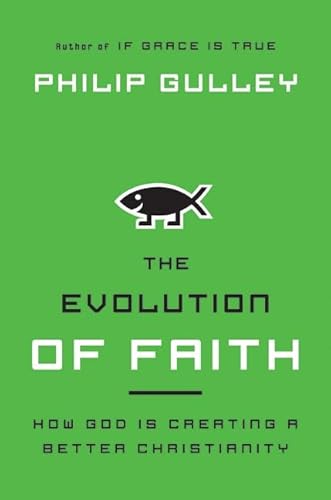
Verwandte Artikel zu The Evolution of Faith: How God Is Creating a Better...
Inhaltsangabe
"Noone raises provocative questions about Christianity more kindly than PhilipGulley. " —Diana Butler Bass,author of Christianity for the Rest of Us
“Everyserious Christian ought to read this book, ponder it,wrestlewith it, but above all, be grateful for its presence in today's urgentconversation about what we are and are becoming as a people of God.” —Phyllis Tickle, author of The GreatEmergence
RenownedQuaker minister Philip Gulley, bestselling author of If the Church WereChristian, delivers a practical, insightful guide to developing aliving, flexible, personal Christianity—a faith that allows you to confront theprofound challenges facing every believer in today’s difficult world.
Die Inhaltsangabe kann sich auf eine andere Ausgabe dieses Titels beziehen.
Über die Autorin bzw. den Autor
Philip Gulley is a Quaker minister, writer, husband, and father. He is the bestselling author of Front Porch Tales, the acclaimed Harmony series, and is coauthor of If Grace Is True and If God Is Love. Gulley lives with his wife and two sons in Indiana, and is a frequent speaker at churches, colleges, and retreat centers across the country.
Von der hinteren Coverseite
For too long, American Christianity has been poisoned by a narrowness of mind and spirit, demanding we believe the implausible, affirm the absurd, and despise the different. For many, the concepts of original sin, a God who sends people to hell, and Jesus as the only path to God can no longer be stomached. Thus thoughtful people leave the church in droves, no longer willing to diminish their lives or the lives of others for the sake of faith.
But what if there were another way? What if God wanted us to grow and change, both in our theology and our beliefs? In The Evolution of Faith, Philip Gulley invites us to put aside slavish obedience to antiquated faith claims and worldviews that no longer ring true, and discover what we really believe, rather than what we've always been taught. Instead of looking for answers outside ourselves, Gulley encourages us to develop our own apologetics, a belief system open to change. In this paradigm, faith should always be seen as a work in progress.
Only when we break free from the tenets of Christianity that no longer further the faith can we create a vital and believable Christianity—a Christianity that brings out the best in us, not the worst; a Christianity at home with people of other faiths; a Christianity grateful for scientific knowledge. This is a Christianity many of us have longed for, but haven't yet found.
This book is Gulley's effort to discover a Christianity we, and all the world, can live with.
Auszug. © Genehmigter Nachdruck. Alle Rechte vorbehalten.
The Evolution of Faith
How God Is Creating a Better ChristianityBy Philip GulleyHarperOne
Copyright © 2011 Philip GulleyAll right reserved.
ISBN: 9780060736606
Chapter One
Several years ago, at the invitation of a friend, I attended
his childhood church on the Sunday it celebrated its
one-hundredth anniversary. The pastor, in an exuberant
moment, spoke of the enduring proclamation of the church,
how since the time of Jesus the unchanging Christian gospel
had been proclaimed throughout the world. The congregation
nodded in agreement, even affirming their assent with
robust ?Amens.? As a student of church history, I knew the
pastor?s claims were inaccurate, that over the past two
thousand years, the church?s message had undergone significant
change, influenced by pivotal figures and movements. I even
suspected that this specific church had experienced considerable
theological change over its hundred years, reflecting the
varied perspectives of its leaders.
I thought of the diverse mutations of Christianity I had
encountered in my life?the Roman Catholicism of my
mother, the Baptist leanings of my father?s family, the Church
of Christ tradition of a brother and sister, the Methodist
perspective of another brother, the Presbyterian community of
yet another sibling, and my own Quaker tradition. Each of
those expressions emphasized a particular facet of the Christian
experience. Each understood the mission of the church
differently, employed differing styles of worship, and did
not agree on how God could be known. They were not in
harmony about the priorities of Jesus, and they did not share
a common understanding of what it meant to be Christian,
what it meant to please God, or how the church should be
governed. Though they all bore the Christian name, their
differences in belief were so considerable that one could
reasonably conclude they represented different religions
altogether. And that was just Christianity in the Western world.
Were we to have stirred into the mix the many strains of
Eastern Orthodoxy, the differences would have been staggering
indeed.
Though I disagreed with the pastor?s claim of an unchanged
church, I understood his motives for making such
an assertion. The church?s authority rests on its declaration of
doctrinal purity and her ageless, unchanging truths. Pastors
who acknowledge the church?s changing truth must convince
congregants he or she nevertheless speaks with authority, a
hard enough task in a culture already suspicious of
institutional power.
At first glance, the title, The Evolution of Faith: How God
Is Creating a Better Christianity, may seem presumptuous and
egotistical, as if God were using me to liberate Christianity
from its ancient moorings and carry it forward. But on
a closer look, it makes perfect sense that if there are many
versions of Christianity, that if Christianity has mutated and
evolved over the centuries, it?s reasonable to conclude it will
continue to do so. It is also reasonable to conclude God might
inspire a number of people to shepherd that process, that I
might be one of them, just as you might be, and that a fitting
response is to share our insights with others. Therefore, to
speak of an evolving Christianity isn?t to undertake a radical
and unilateral overhaul of the faith, but to suggest a possible
way forward that not only honors the ethos of Jesus but is
conversant with our time and culture. For while it is clear
that Christianity has changed and will continue to do so,
what is less clear are the forms it might take.
What are the cultural factors that make an evolving
Christianity inevitable? At the Quaker meeting I pastor, a woman
of the Baha?i faith joins her Quaker husband in meeting for
worship. Another attendee, a Jewish man, teaches an adult
Sunday-school class; a young man in the congregation met
a woman of the Muslim faith while in college; they married
and are warmly welcomed into our meeting. Another man,
intelligent and deeply caring, speaks openly about his leanings
toward atheism. Imagine my standing at the pulpit and
pronouncing these people spiritually lost, urging them to
accept Jesus as their Savior. Not only would my sense of
decorum prohibit that, but so would my appreciation for their
obvious virtues. They are, to a person, loving, gracious, and
wise. For me to suggest they are spiritually inferior would be
not only unkind, but untrue.
At one time I thought such diversity was rare, but as I
speak with my colleagues in ministry, I?ve discerned that
more and more people are marrying outside their childhood
faith, that those couples find joy and meaning in other
spiritual expressions, and that many churches have incorporated
these persons into their fellowships with sensitivity and
warmth. This widespread openness to diverse religious
traditions points to an evolving Christianity more tolerant than its
predecessors.
In addition to this spiritual diversity, the pervasive
acceptance of scientific advancements has significantly altered
Christianity, especially those kinds of Christianity predicated
on an outdated worldview. It is no longer possible for people
to reject the scientific evidence of evolution without seeming
ignorant. Nor is it possible, given what we know about
homosexuality, to sustain a Christianity that asserts one?s
sexual orientation is chosen or inherently sinful. Add to this
the stunning social changes brought about by the Internet,
making spiritual and cultural isolation nearly impossible.
Narrow religions can only be sustained when and where
information is limited and controlled, when people are able to
be ?not of the world.?
Case in point: at the urging of my publisher, I began a
Facebook page. I have several thousand Facebook ?friends?
from a variety of geographical and religious backgrounds.
Nearly every week, I post a theological or spiritual question,
inviting responses. Given the diversity of my friends, the
answers widely differ. I expected this. What I did not expect
was the extent to which my Facebook friends would engage
one another. Almost without exception, those exchanges have
been cordial and sincere, with persons expressing much interest
in the views of others, saying such things as, ?I see your
point. It makes a lot of sense. I?ll have to rethink this.?
The church?s monopoly on Christian instruction is over.
People feel quite free to join in theological discourse without
the buffer of the church or its clergy. Were I in a religious
tradition that emphasized the supremacy of a professional
religious hierarchy, I would worry for my job, for it is apparent
that more and more people are looking to spiritual resources
beyond the conventional ones offered by the church. Whether
people turn to a Facebook friend, or a TV talk show, or a
neighbor, or a bestselling book, they are seeking religious
counsel and spiritual insight outside the church. As they do,
the church?s authority, already weakened by scandal, abuse,
and irrelevancy, will, I believe, evaporate altogether.
These cultural factors?religious diversity, advancements
in science, expanded communication, and the church?s...
„Über diesen Titel“ kann sich auf eine andere Ausgabe dieses Titels beziehen.
Suchergebnisse für The Evolution of Faith: How God Is Creating a Better...

Beispielbild für diese ISBN
The Evolution of Faith: How God is Creating a Better Christianity
Verlag:
HarperCollins Publishers Inc, 2011
ISBN 10: 0060736607
ISBN 13: 9780060736606
Gebraucht
Hardcover
Anbieter: World of Books (was SecondSale), Montgomery, IL, USA
Verkäuferbewertung 5 von 5 Sternen

Hardback. Zustand: Very Good. "Noone raises provocative questions about Christianity more kindly than PhilipGulley. " --Diana Butler Bass,author of Christianity for the Rest of Us "Everyserious Christian ought to read this book, ponder it,wrestlewith it, but above all, be grateful for its presence in today's urgentconversation about what we are and are becoming as a people of God." --Phyllis Tickle, author of The GreatEmergence RenownedQuaker minister Philip Gulley, bestselling author of If the Church WereChristian, delivers a practical, insightful guide to developing aliving, flexible, personal Christianity--a faith that allows you to confront theprofound challenges facing every believer in today's difficult world. Artikel-Nr. 00098470928
Gebraucht kaufen
EUR 4,64
Versand gratis
Versand innerhalb von USA
Versand innerhalb von USA
Anzahl: 1 verfügbar
Beispielbild für diese ISBN
The Evolution of Faith: How God is Creating a Better Christianity
Verlag:
HarperCollins Publishers Inc, 2011
ISBN 10: 0060736607
ISBN 13: 9780060736606
Gebraucht
Hardcover
Anbieter: World of Books (was SecondSale), Montgomery, IL, USA
Verkäuferbewertung 5 von 5 Sternen
Hardback. Zustand: Good. "Noone raises provocative questions about Christianity more kindly than PhilipGulley. " --Diana Butler Bass,author of Christianity for the Rest of Us "Everyserious Christian ought to read this book, ponder it,wrestlewith it, but above all, be grateful for its presence in today's urgentconversation about what we are and are becoming as a people of God." --Phyllis Tickle, author of The GreatEmergence RenownedQuaker minister Philip Gulley, bestselling author of If the Church WereChristian, delivers a practical, insightful guide to developing aliving, flexible, personal Christianity--a faith that allows you to confront theprofound challenges facing every believer in today's difficult world. Artikel-Nr. 00101976921
Gebraucht kaufen
EUR 4,64
Versand gratis
Versand innerhalb von USA
Versand innerhalb von USA
Anzahl: 2 verfügbar
Beispielbild für diese ISBN
The Evolution of Faith: How God is Creating a Better Christianity
Verlag:
HarperCollins Publishers Inc, 2011
ISBN 10: 0060736607
ISBN 13: 9780060736606
Gebraucht
Hardcover
Anbieter: World of Books (was SecondSale), Montgomery, IL, USA
Verkäuferbewertung 5 von 5 Sternen
Hardback. Zustand: Fair. "Noone raises provocative questions about Christianity more kindly than PhilipGulley. " --Diana Butler Bass,author of Christianity for the Rest of Us "Everyserious Christian ought to read this book, ponder it,wrestlewith it, but above all, be grateful for its presence in today's urgentconversation about what we are and are becoming as a people of God." --Phyllis Tickle, author of The GreatEmergence RenownedQuaker minister Philip Gulley, bestselling author of If the Church WereChristian, delivers a practical, insightful guide to developing aliving, flexible, personal Christianity--a faith that allows you to confront theprofound challenges facing every believer in today's difficult world. Artikel-Nr. 00102547955
Gebraucht kaufen
EUR 4,64
Versand gratis
Versand innerhalb von USA
Versand innerhalb von USA
Anzahl: 1 verfügbar
Beispielbild für diese ISBN
The Evolution of Faith: How God Is Creating a Better Christianity
Anbieter: BooksRun, Philadelphia, PA, USA
Verkäuferbewertung 5 von 5 Sternen
Hardcover. Zustand: Very Good. With dust jacket. It's a well-cared-for item that has seen limited use. The item may show minor signs of wear. All the text is legible, with all pages included. It may have slight markings and/or highlighting. Artikel-Nr. 0060736607-8-1-29
Gebraucht kaufen
EUR 4,65
Versand gratis
Versand innerhalb von USA
Versand innerhalb von USA
Anzahl: 1 verfügbar
Beispielbild für diese ISBN
The Evolution of Faith: How God Is Creating a Better Christianity
Anbieter: ThriftBooks-Reno, Reno, NV, USA
Verkäuferbewertung 5 von 5 Sternen
Hardcover. Zustand: Very Good. No Jacket. May have limited writing in cover pages. Pages are unmarked. ~ ThriftBooks: Read More, Spend Less. Artikel-Nr. G0060736607I4N00
Gebraucht kaufen
EUR 5,96
Versand gratis
Versand innerhalb von USA
Versand innerhalb von USA
Anzahl: 1 verfügbar
Beispielbild für diese ISBN
The Evolution of Faith: How God Is Creating a Better Christianity
Anbieter: ThriftBooks-Phoenix, Phoenix, AZ, USA
Verkäuferbewertung 5 von 5 Sternen
Hardcover. Zustand: Very Good. No Jacket. May have limited writing in cover pages. Pages are unmarked. ~ ThriftBooks: Read More, Spend Less. Artikel-Nr. G0060736607I4N00
Gebraucht kaufen
EUR 5,96
Versand gratis
Versand innerhalb von USA
Versand innerhalb von USA
Anzahl: 1 verfügbar
Beispielbild für diese ISBN
The Evolution of Faith: How God Is Creating a Better Christianity
Anbieter: ThriftBooks-Dallas, Dallas, TX, USA
Verkäuferbewertung 5 von 5 Sternen
Hardcover. Zustand: Very Good. No Jacket. May have limited writing in cover pages. Pages are unmarked. ~ ThriftBooks: Read More, Spend Less. Artikel-Nr. G0060736607I4N00
Gebraucht kaufen
EUR 5,98
Versand gratis
Versand innerhalb von USA
Versand innerhalb von USA
Anzahl: 1 verfügbar
Beispielbild für diese ISBN
The Evolution of Faith: How God Is Creating a Better Christianity
Anbieter: ThriftBooks-Atlanta, AUSTELL, GA, USA
Verkäuferbewertung 5 von 5 Sternen
Hardcover. Zustand: Very Good. No Jacket. May have limited writing in cover pages. Pages are unmarked. ~ ThriftBooks: Read More, Spend Less. Artikel-Nr. G0060736607I4N00
Gebraucht kaufen
EUR 5,98
Versand gratis
Versand innerhalb von USA
Versand innerhalb von USA
Anzahl: 1 verfügbar
Beispielbild für diese ISBN
The Evolution of Faith : How God Is Creating a Better Christianity
Verlag:
HarperCollins Publishers, 2011
ISBN 10: 0060736607
ISBN 13: 9780060736606
Gebraucht
Hardcover
Anbieter: Better World Books, Mishawaka, IN, USA
Verkäuferbewertung 5 von 5 Sternen
Zustand: Good. Former library copy. Pages intact with minimal writing/highlighting. The binding may be loose and creased. Dust jackets/supplements are not included. Includes library markings. Stock photo provided. Product includes identifying sticker. Better World Books: Buy Books. Do Good. Artikel-Nr. 1998501-6
Gebraucht kaufen
EUR 6,18
Versand gratis
Versand innerhalb von USA
Versand innerhalb von USA
Anzahl: 1 verfügbar
Beispielbild für diese ISBN
The Evolution of Faith : How God Is Creating a Better Christianity
Verlag:
HarperCollins Publishers, 2011
ISBN 10: 0060736607
ISBN 13: 9780060736606
Gebraucht
Hardcover
Anbieter: Better World Books, Mishawaka, IN, USA
Verkäuferbewertung 5 von 5 Sternen
Zustand: Very Good. Former library copy. Pages intact with possible writing/highlighting. Binding strong with minor wear. Dust jackets/supplements may not be included. Includes library markings. Stock photo provided. Product includes identifying sticker. Better World Books: Buy Books. Do Good. Artikel-Nr. 8230587-75
Gebraucht kaufen
EUR 6,18
Versand gratis
Versand innerhalb von USA
Versand innerhalb von USA
Anzahl: 1 verfügbar