
Verwandte Artikel zu The Ties That Bind: Intelligence Cooperation Between...
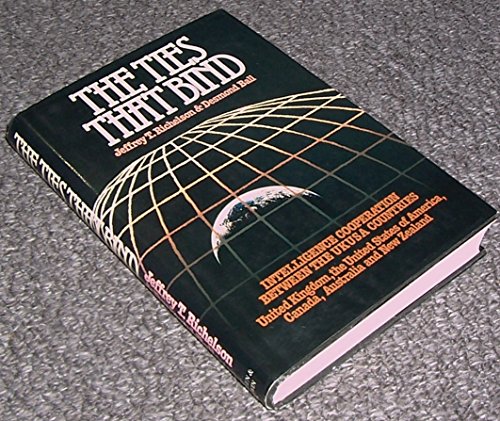
The Ties That Bind: Intelligence Cooperation Between the United Kingdom/United States of America Countries - United Kingdom, United States of America, Canada, Australia and New Zealand - Hardcover
Suchergebnisse für The Ties That Bind: Intelligence Cooperation Between...

Foto des Verkäufers
The Ties That Bind: Intelligence Cooperation Between the UKUSA Countries - the United Kingdom, the United States of America, Canada, Australia and New Zealand
Verlag:
Allen & Unwin, 1986
ISBN 10: 0043270921
ISBN 13: 9780043270929
Gebraucht
Hardcover
Erstausgabe
Anbieter: Cotswold Internet Books, Cheltenham, Vereinigtes Königreich
Verkäuferbewertung 5 von 5 Sternen

1st edition. 1st edition, 1985. Owner's name on front free end paper; text clean; binding tight. Used - Very Good. VG hardback in VG dust jacket. Artikel-Nr. BOOKS323952I
Gebraucht kaufen
EUR 23,33
EUR 16,26 Versand
Versand von Vereinigtes Königreich nach USA
Versand von Vereinigtes Königreich nach USA
Anzahl: 1 verfügbar
Beispielbild für diese ISBN
The Ties That Bind: Intelligence Cooperation Between the United Kingdom/United States of America Countries - United Kingdom, United States of America, Canada, Australia and New Zealand
Verlag:
HarperCollins Publishers Ltd, 1986
ISBN 10: 0043270921
ISBN 13: 9780043270929
Gebraucht
Hardcover
Anbieter: AwesomeBooks, Wallingford, Vereinigtes Königreich
Verkäuferbewertung 5 von 5 Sternen
Hardcover. Zustand: Very Good. The Ties That Bind: Intelligence Cooperation Between the United Kingdom/United States of America Countries - United Kingdom, United States of America, Canada, Australia and New Zealand This book is in very good condition and will be shipped within 24 hours of ordering. The cover may have some limited signs of wear but the pages are clean, intact and the spine remains undamaged. This book has clearly been well maintained and looked after thus far. Money back guarantee if you are not satisfied. See all our books here, order more than 1 book and get discounted shipping. . Artikel-Nr. 7719-9780043270929
Gebraucht kaufen
EUR 35,55
EUR 4,78 Versand
Versand von Vereinigtes Königreich nach USA
Versand von Vereinigtes Königreich nach USA
Anzahl: 1 verfügbar
Beispielbild für diese ISBN
The Ties That Bind: Intelligence Cooperation Between the United Kingdom/United States of America Countries - United Kingdom, United States of America, Canada, Australia and New Zealand
Verlag:
HarperCollins Publishers Ltd 06/02/1986, 1986
ISBN 10: 0043270921
ISBN 13: 9780043270929
Gebraucht
Hardcover
Anbieter: Bahamut Media, Reading, Vereinigtes Königreich
Verkäuferbewertung 5 von 5 Sternen
Hardcover. Zustand: Very Good. Shipped within 24 hours from our UK warehouse. Clean, undamaged book with no damage to pages and minimal wear to the cover. Spine still tight, in very good condition. Remember if you are not happy, you are covered by our 100% money back guarantee. Artikel-Nr. 6545-9780043270929
Gebraucht kaufen
EUR 35,55
EUR 8,11 Versand
Versand von Vereinigtes Königreich nach USA
Versand von Vereinigtes Königreich nach USA
Anzahl: 1 verfügbar
Beispielbild für diese ISBN
The ties that bind: Intelligence cooperation between the UKUSA countries, the United Kingdom, the United States of America, Canada, Australia, and New Zealand
Verlag:
Allen & Unwin, 1985
ISBN 10: 0043270921
ISBN 13: 9780043270929
Gebraucht
Hardcover
Erstausgabe
Anbieter: John Hopkinson - Bookseller, Cremona, AB, Kanada
Verkäuferbewertung 5 von 5 Sternen
Hardcover. Zustand: Near Fine. Zustand des Schutzumschlags: Good. 1st Edition. private library liquidation inscription to senator. Artikel-Nr. 8716
Gebraucht kaufen
EUR 36,22
EUR 24,62 Versand
Versand von Kanada nach USA
Versand von Kanada nach USA
Anzahl: 1 verfügbar
Beispielbild für diese ISBN
The Ties That Bind: Intelligence Cooperation Between the United Kingdom/United States of America Countries - United Kingdom, United States of America, Canada, Australia and New Zealand
Anbieter: Gareth Roberts, Rhydcymerau, Llandeilo, CARMS, Vereinigtes Königreich
Verkäuferbewertung 5 von 5 Sternen
Hardcover. Zustand: Fair. Zustand des Schutzumschlags: Fair. ex library hardback with D/J. Usual stamps/markings. 1985 publication by Allen & Unwin with 402pp. DJ little worn, page edges little grubby otherwise a clean, sound copy. Ready for immediate despatch from UK. 18F*. Artikel-Nr. SFL2-22A44
Gebraucht kaufen
EUR 33,46
EUR 29,04 Versand
Versand von Vereinigtes Königreich nach USA
Versand von Vereinigtes Königreich nach USA
Anzahl: 1 verfügbar
Beispielbild für diese ISBN
THE TIES THAT BIND Intelligence Cooperation Between the UKUSA Countries - the United Kingdom, the United States of America, Canada, Australia and New Zealand
Anbieter: J. Wyatt Books, Ottawa, ON, Kanada
Verkäuferbewertung 5 von 5 Sternen
Hardcover. Zustand: VG+. Zustand des Schutzumschlags: VG+. 402 pages in very good condition. Illustrated. Black cloth with gilt titles on the spine. Light bumping on the corners. Small chip on both bottom edges. Black DJ with illustration and white/brown titles. Light wear on the corners and edges. VG+/VG+. Book. Artikel-Nr. 220074
Gebraucht kaufen
EUR 67,69
EUR 20,22 Versand
Versand von Kanada nach USA
Versand von Kanada nach USA
Anzahl: 1 verfügbar
Beispielbild für diese ISBN
The Ties That Bind; Intelligence Cooperation between the UKUSA Countries--the U.K., the U.S.A., Canada, Australia & New Zealand
Verlag:
Allen & Unwin, Boston, MA, 1985
ISBN 10: 0043270921
ISBN 13: 9780043270929
Gebraucht
Hardcover
Erstausgabe
Anbieter: Ground Zero Books, Ltd., Silver Spring, MD, USA
Verkäuferbewertung 5 von 5 Sternen
Hardcover. Zustand: Very good. Zustand des Schutzumschlags: Good. Presumed First Edition, First printing. xvi, [2], 402 pages. Illustrations. Figures. Appendices. Notes. Index. Some wear to top and bottom DJ edges. Examines the intelligence community of each country, how they cooperate, outcomes, etc. Jeffrey Talbot Richelson (31 December 1949 11 November 2017) was an American author and academic researcher who studied the process of intelligence gathering and national security. He authored at least thirteen books and many articles about intelligence, and directed the publication of several of the National Security Archive's collections of source documents. Richelson was notable for his relentless Freedom of Information requests in order to further scholarship in intelligence and espionage. According to Bruce D. Berkowitz, Richelson was once avoided by the intelligence community as an outsider and a security risk, but gradually became trusted to the extent that he was invited to Central Intelligence Agency sponsored conferences. Richelson completed a Ph.D. in political science at the University of Rochester in 1975 and went on to teach at the University of Texas, Austin and American University. Desmond John Ball AO (20 May 1947 12 October 2016) was an Australian academic and expert on defense and security. He was credited with successfully advising the United States against nuclear escalation in the 1970s. Ball worked on Australia's signal intelligence and exposed Australia's secret history of cracking diplomatic cables. In 1998, with David Horner he confirmed wartime Soviet spying in Australia revealed by the Petrov Affair, carried out by staff in he Foreign Affairs Department. This work offers an account of a secret treaty entered upon by Britain, the United States, Australia, Canada and New Zealand in 1947, and which concerned the creation of a global network of security and intelligence co-operation amongst the participants. The book examines each of the countries' intelligence communities and also traces the web of inter-relationships amongst the five countries over the 30 years of the existence of the treaty, assessing the costs and benefits of secretive co-operation. Also included is a chapter examining recent changes and new disclosures that have taken place in the last five years and the implications for the future. The authors jointly edited "Strategic Nuclear Targeting" and Desmond Ball is the author of "A Suitable Piece of Real Estate: American Institutions in Australia", "A Base for Debate" and "Pine Gap". The Five Eyes (FVEY) is an Anglosphere intelligence alliance comprising Australia, Canada, New Zealand, the United Kingdom, and the United States. These countries are party to the multilateral UKUSA Agreement, a treaty for joint cooperation in signals intelligence. Informally, "Five Eyes" can refer to the group of intelligence agencies of these countries. The term "Five Eyes" originated as shorthand for a "AUS/CAN/NZ/UK/US Eyes Only" (AUSCANNZUKUS) releasability caveat. The origins of the FVEY can be traced to informal, secret meetings during World War II between British and American code-breakers that took place before the US formally entered the war. The alliance was formalized in the post-war era by the UKUSA Agreement in 1946. As the Cold War deepened, the intelligence sharing arrangement was formalised under the ECHELON surveillance system in the 1960s. This system was developed by the FVEY to monitor the communications of the Soviet Union and Eastern Bloc; it is now used to monitor communications worldwide. The FVEY expanded its surveillance capabilities during the course of the "war on terror", with much emphasis placed on monitoring the Internet. The alliance has grown into a robust global surveillance mechanism, adapting to new domains such as international terrorism, cyberattacks, and contemporary regional conflicts. The alliance's activities, often shrouded in secrecy, have occasionally come under scrutiny for their implications on privacy and civil liberties, sparking debates and legal challenges. In the late 1990s, the existence of ECHELON was disclosed to the public, triggering a debate in the European Parliament and, to a lesser extent, the United States Congress and British Parliament. Former NSA contractor Edward Snowden described the Five Eyes as a "supra-national intelligence organization that does not answer to the known laws of its own countries". Disclosures in the 2010s revealed FVEY was spying on one another's citizens and sharing the collected information with each other, although the FVEY nations maintain this was done legally. Five Eyes is among the most comprehensive espionage alliances. Since processed intelligence is gathered from multiple sources, the information shared is not restricted to signals intelligence (SIGINT) and often involves military intelligence (MILINT), human intelligence (HUMINT), and geospatial intelligence (GEOINT). Five Eyes remains a key element in the intelligence and security landscape of each member country, providing them a strategic advantage in understanding and responding to global events. Artikel-Nr. 28979
Gebraucht kaufen
EUR 158,48
EUR 4,40 Versand
Versand innerhalb von USA
Versand innerhalb von USA
Anzahl: 1 verfügbar
Beispielbild für diese ISBN
The Ties That Bind; Intelligence Cooperation between the UKUSA Countries--the U.K., the U.S.A., Canada, Australia & New Zealand
Verlag:
Allen & Unwin, Boston, MA, 1985
ISBN 10: 0043270921
ISBN 13: 9780043270929
Gebraucht
Hardcover
Erstausgabe
Anbieter: Ground Zero Books, Ltd., Silver Spring, MD, USA
Verkäuferbewertung 5 von 5 Sternen
Hardcover. Zustand: Very good. Zustand des Schutzumschlags: Very good. Presumed First Edition, First printing. xvi, [2], 402 pages. Illustrations. Figures. Appendices. Notes. Index. Inscribed by Richelson on the half-title that reads To Jay--a fellow subversive Jeffrey T. Richelson Examines the intelligence community of each country, how they cooperate, outcomes, etc. Jeffrey Talbot Richelson (31 December 1949 11 November 2017) was an American author and academic researcher who studied the process of intelligence gathering and national security. He authored at least thirteen books and many articles about intelligence, and directed the publication of several of the National Security Archive's collections of source documents. According to Bruce D. Berkowitz, Richelson was once avoided by the intelligence community as an outsider and a security risk, but gradually became trusted to the extent that he was invited to Central Intelligence Agency sponsored conferences. Richelson completed a Ph.D. in political science at the University of Rochester in 1975 and went on to teach at the University of Texas, Austin and American University. Desmond John Ball AO (20 May 1947 12 October 2016) was an Australian academic and expert on defense and security. He was credited with successfully advising the United States against nuclear escalation in the 1970s. Ball worked on Australia's signal intelligence and exposed Australia's secret history of cracking diplomatic cables. In 1998, with David Horner he confirmed wartime Soviet spying in Australia revealed by the Petrov Affair, carried out by staff in he Foreign Affairs Department. This work offers an account of a secret treaty entered upon by Britain, the United States, Australia, Canada and New Zealand in 1947, and which concerned the creation of a global network of security and intelligence co-operation amongst the participants. The book examines each of the countries' intelligence communities and also traces the web of inter-relationships amongst the five countries over the 30 years of the existence of the treaty, assessing the costs and benefits of secretive co-operation. Also included is a chapter examining recent changes and new disclosures that have taken place in the last five years and the implications for the future. The authors jointly edited "Strategic Nuclear Targeting" and Desmond Ball is the author of "A Suitable Piece of Real Estate: American Institutions in Australia", "A Base for Debate" and "Pine Gap". The Five Eyes (FVEY) is an Anglosphere intelligence alliance comprising Australia, Canada, New Zealand, the United Kingdom, and the United States. These countries are party to the multilateral UKUSA Agreement, a treaty for joint cooperation in signals intelligence. Informally, "Five Eyes" can refer to the group of intelligence agencies of these countries. The term "Five Eyes" originated as shorthand for a "AUS/CAN/NZ/UK/US Eyes Only" (AUSCANNZUKUS) releasability caveat. The origins of the FVEY can be traced to informal, secret meetings during World War II between British and American code-breakers that took place before the US formally entered the war. The alliance was formalized in the post-war era by the UKUSA Agreement in 1946. As the Cold War deepened, the intelligence sharing arrangement was formalised under the ECHELON surveillance system in the 1960s. This system was developed by the FVEY to monitor the communications of the Soviet Union and Eastern Bloc; it is now used to monitor communications worldwide. The FVEY expanded its surveillance capabilities during the course of the "war on terror", with much emphasis placed on monitoring the Internet. The alliance has grown into a robust global surveillance mechanism, adapting to new domains such as international terrorism, cyberattacks, and contemporary regional conflicts. The alliance's activities, often shrouded in secrecy, have occasionally come under scrutiny for their implications on privacy and civil liberties, sparking debates and legal challenges. In the late 1990s, the existence of ECHELON was disclosed to the public, triggering a debate in the European Parliament and, to a lesser extent, the United States Congress and British Parliament. Former NSA contractor Edward Snowden described the Five Eyes as a "supra-national intelligence organization that does not answer to the known laws of its own countries". Disclosures in the 2010s revealed FVEY was spying on one another's citizens and sharing the collected information with each other, although the FVEY nations maintain this was done legally. Five Eyes is among the most comprehensive espionage alliances. Since processed intelligence is gathered from multiple sources, the information shared is not restricted to signals intelligence (SIGINT) and often involves military intelligence (MILINT), human intelligence (HUMINT), and geospatial intelligence (GEOINT). Five Eyes remains a key element in the intelligence and security landscape of each member country, providing them a strategic advantage in understanding and responding to global events. Artikel-Nr. 90536
Gebraucht kaufen
EUR 679,20
EUR 4,40 Versand
Versand innerhalb von USA
Versand innerhalb von USA
Anzahl: 1 verfügbar