
Inhaltsangabe
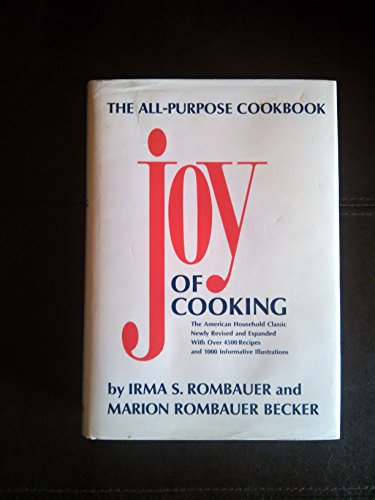
Joy is the all-purpose cookbook. There are other basic cookbooks on the market, and there are fine specialty cookbooks, but no other cookbook includes such a complete range of recipes in every category: everyday, classic, foreign and de luxe. Joy is the one indispensable cookbook, a boon to the beginner, treasure for the experienced cook, the foundation of many a happy kitchen and many a happy home.
Privately printed in 1931, Joy has always been family affair, and like a family it has grown. Written by Irma Starkloff Rombauer, a St. Louisan, it was first tested and illustrated by her daughter, Marion Rombauer Becker, and subsequently it was revised and enlarged through Marion's efforts and those of her architect husband, John W. Becker. Their sons—Ethan, with his Cordon Bleu and camping experiences, and Mark, with his interest in natural foods-have reinforced Joy in many ways.
Now over forty, Joy continues to be a family affair, demonstrating more than ever the awareness we all share in the growing preciousness of food. Special features in this edition are the chapter on Heat, which gives you many hints on maintaining the nutrients in the food you are cooking, and Know Your Ingredients, which reveals vital characteristics of the materials you commonly combine, telling how and why they react as they do; how to measure them; when feasible, how to substitute one for another; as well as amounts to buy. Wherever possible, information also appears at the point of use.
Divided into three parts, Foods We Eat, Foods We Heat and Foods We Keep, Joy now contains more than 4500 recipes, many hundreds of them new to this edition—the first full revision in twelve years. All the enduring favorites will still be found. In the chapter on Brunch, Lunch and Supper Dishes there are also interesting suggestions for using convenience and leftover foods. Through its more than 1000 practical, delightful drawings by Ginnie Hofmann and Ikki Matsumoto, Joy shows how to present food correctly and charmingly, from the simplest to the most formal service; how to prepare ingredients with classic tools and techniques; and how to preserve safely the results of your canning and freezing.
Joy grows with the times; it has a full roster of American and foreign dishes: Strudel, Zabaglione, Rijsttafel, Couscous, among many others. All the classic terms you find on menus, such as Provencale, bonne femme, meunière and Florentine, are not merely defined but fully explained so you yourself can confect the dish they characterize. Throughout the book the whys and wherefores of the directions are given, with special emphasis on that vital cooking factor—heat. Did you know that even the temperature of an ingredient can make or mar your best-laid plans? Learn exactly what the results of simmering, blanching, roasting and braising have on your efforts. Read the enlarged discussion on herbs, spices and seasonings, and note that their use is included in suitable amounts in the recipes. No detail necessary to your success in cooking has been omitted.
Joy, we hope, will always remain essentially a family affair, as well as an enterprise in which its authors owe no obligation to anyone but to themselves and to you. Choose from our offerings what suits your person, your way of life, your pleasure—and join us in the Joy of cooking.
Because of the infinite patience that has gone into the preparation of Joy of Cooking, the publishers offer it on a money-back guarantee. Without question there is no finer all-purpose cookbook.
Die Inhaltsangabe kann sich auf eine andere Ausgabe dieses Titels beziehen.
Über die Autorin bzw. den Autor
Irma Rombauer self-published the first Joy of Cooking in 1931. In 1936, the first commercial edition was published by Bobbs-Merrill. Marion Rombauer Becker, Irma’s daughter, helped revise and update each subsequent edition until 1951. The 1963 edition was the first after Irma’s death and was completely Marion’s. Her son, Ethan Becker, helped Marion revise the 1975 edition, and then oversaw the 1997 and 75th Anniversary editions. Ethan’s son, John Becker and his wife, Megan Scott are the first of the family to be solely responsible for testing, revising, and updating the book since 1975, ensuring the latest edition is given the same love and attention to detail that made this culinary resource an American classic.
Auszug. © Genehmigter Nachdruck. Alle Rechte vorbehalten.
Chapter 1
FOODS WE EAT
Put this puzzle together and you will find milk, cheese and eggs, meat, fish, beans and cereals, greens, fruits and root vegetables -- foods that contain our essential daily needs.
Exactly how they interlock and in what quantities for the most advantageous results for every one of us is another puzzle we must try to solve for ourselves, keeping in mind our age, body type, activities, the climate in which we live, and the food sources available to us. How we wish someone could present us with hard and fast rules as to how and in what exact quantities to assemble the proteins, fats and carbohydrates as well as the small but no less important enzyme and hormone systems, the vitamins, and the trace minerals these basic foods contain so as best to build body structure, maintain it, and give us an energetic zest for living!
Where to turn? Not to the sensational press releases that follow the discovery of fascinating bits and pieces about human nutrition; nor to the oversimplified and frequently ill-founded dicta of food faddists that can lure us into downright harm. First we must search for the widest variety of the best grown unsprayed foods we can find in their freshest condition, and then look for foods with minimal but safe processing and preservatives and without synthetic additives. While great strides have been made in the storage of foods commercially and in the home, if fresh foods in good condition are available to you, choose them every time. To compare the nutritive values in frozen, canned and fresh vegetables, see 798.
Next we can find in the U.S. Handbook on the Composition of Foods some of the known calorie, protein and other values based on the edible portions of common foods. Recent mandatory labeling information, 7, is of some help, although the U.S. Recommended Daily Allowances are based on information from a nongovernmental agency, the National Research Council, a source not acceptable to some authorities. But no one chart of group of charts is the definitive answer for most of us, who are simply not equipped to evaluate the complex relationships of these elements, or to adapt them to the practicalities of daily living. Such studies are built up as averages, and thus have greater value in presenting an overall picture than in solving our individual nutrition problems.
Nevertheless, by applying plain common sense to available mass data, we as well as the experts are inclined to agree that many Americans are privileged to enjoy superabundance and that our nutritional difficulties have to do generally not with under- but with overeating. Statistics on consumption also bear out other trends: first, that we frequently make poor choices and eat too much of the wrong kinds of foods; second, that many of us overconsume drugs as well as foods. Medication, often a lifesaver, may, when used habitually, induce ah adverse effect on the body's ability to profit fully from even the best dietary intake.
Individually computerized diagnoses of our lacks may prove a help in adjusting our deficiencies to our needs. But what we all have in our bodies is one of the greatest of marvels: an already computerized but infinitely more complex built-in system that balances and allocates with infallible and almost instant decision what we ingest, sending each substance on its proper course to make the most of what we give it. And since nutrition is concerned not only with food as such but with the substances that food contains, once these essential nutrients ate chosen, their presentation in the very best state for the body's absorption is the cook's first and foremost job. Often taste, flavor and color at their best reflect this job well done. Read The Foods We Heat, 145, and follow our pointers to success for effective ways to preserve essential nutrients during cooking. And note at the point of use recommendations for optimum storage and handling conditions, for one must always bear in mind the fragility of foods and the many ways contaminants can affect them, and consequently us, when they are carelessly handled or even when such a simple precaution as washing the hands before preparing foods is neglected.
But now let's turn to a more detailed view of nutritional terms: calories, proteins, fats, carbohydrates, accessory factors like vitamins, minerals, enzymatic and hormonal fractions -- all of which are needed -- and see how they interact to maintain the dietary intake best suited to our individual needs.
ABOUT CALORIES
A too naïve theory used to prevail for explaining regeneration through food. The human system was thought of as an engine, and you kept it stoked with foods to produce energy. Food can be and still is measured in units of heat, or calories. A Calorie, sometimes called a kilocalorie or K Calorie, is the amount of heat needed to raise one kilogram of water one degree Centigrade. Thus translated into food values, each gram of protein in egg, milk, meat or fish is worth four calories; each gram of carbohydrate in starches and sugars or in vegetables, four calories; and each gram of fat in butters, in vegetable oils and drippings, and in hidden fats, 5, about nine calories. The mere stoking of the body's engine with energy-producing foods may keep life going in emergencies. But to maintain health, food must also have, besides its energy values, the proper proportions of biologic values. Proteins, vitamins, enzymes, hormones, minerals and their regulatory functions are still too complicated to be fully understood. But fortunately for us the body is able to respond to them intuitively.
What we really possess, then, we repeat, is not justa simple stoking mechanism, but a computer system far more elaborate and knowledgeable than anything that man has been able to devise. Our job is to help it along as much as possible, neither stinting ir nor overloading it. Depending on age, weight and activity the following is a rough guide to the favorable division of daily caloric intake: a minimum of 15% for proteins, under 25% for fats, and about 60% for carbohydrates. These percentages are relative: some people with highly efficient absorption and superior metabolism require both lower intake and the lesser amount of protein. No advice for reducing is given here, nor are the vaunted advantages of unusually high protein intake considered -- as again such decisions must be highly individual, see About Proteins, at right. In general, and depending also on age, sex, body type and amount of physical activity, adults can use 1700 to 3000 calories a day. Adolescent boys and very active men under fifty-five can utilize close to 3000 calories a day. At the other extreme, women over fifty-five need only about 1700 calories. Women from eighteen to thirty-five need about 2000 calories daily. During pregnancy they can add 200 calories and, during lactation, an extra 1000 calories. Children one to six need from 1100 to 1600. Before a baby's first birthday, his diet should be closely watched, and parents should ask their pediatricians about both the kinds and the amounts of food to give their baby.
Given your present weight, perhaps a more accurate way to calculate your individual calorie requirement is to consider your activity rate. If you use a car to go to work and have a fairly sedentary job, or even if you are a housewife with small children, your rate is probably only 20%; 30% if you are a delivery man of patrolman working out of doors, and 50% if you are a dirt farmer, construction worker or athlete in training. If you multiply your weight by 14 calories, you will get your basal need, that is, the calories you would require if you were completely inactive. When you multiply this amount by your own activity factor and add it to your basal needs, you should get ah approximation of your required daily caloric intake. If you...
„Über diesen Titel“ kann sich auf eine andere Ausgabe dieses Titels beziehen.
Suchergebnisse für JOC - 1975

Beispielbild für diese ISBN
Joy of Cooking
Verlag:
The Bobbs-Merrill Company, 1997
ISBN 10: 0026045702
ISBN 13: 9780026045704
Gebraucht
Hardcover
Anbieter: World of Books (was SecondSale), Montgomery, IL, USA
Verkäuferbewertung 5 von 5 Sternen

Zustand: Acceptable. Item in acceptable condition! Textbooks may not include supplemental items i.e. CDs, access codes etc. Artikel-Nr. 00101588507
Gebraucht kaufen
EUR 4,90
Versand gratis
Versand innerhalb von USA
Versand innerhalb von USA
Anzahl: Mehr als 20 verfügbar
Beispielbild für diese ISBN
Joy of Cooking
Verlag:
The Bobbs-Merrill Company, 1997
ISBN 10: 0026045702
ISBN 13: 9780026045704
Gebraucht
Hardcover
Anbieter: World of Books (was SecondSale), Montgomery, IL, USA
Verkäuferbewertung 5 von 5 Sternen
Zustand: Very Good. Item in very good condition! Textbooks may not include supplemental items i.e. CDs, access codes etc. Artikel-Nr. 00107064438
Gebraucht kaufen
EUR 4,90
Versand gratis
Versand innerhalb von USA
Versand innerhalb von USA
Anzahl: 1 verfügbar
Beispielbild für diese ISBN
JOY OF COOKING
Verlag:
The Bobbs-Merrill Company, 1997
ISBN 10: 0026045702
ISBN 13: 9780026045704
Gebraucht
Hardcover
Anbieter: ThriftBooks-Atlanta, AUSTELL, GA, USA
Verkäuferbewertung 5 von 5 Sternen
Hardcover. Zustand: Good. No Jacket. Former library book; Pages can have notes/highlighting. Spine may show signs of wear. ~ ThriftBooks: Read More, Spend Less. Artikel-Nr. G0026045702I3N10
Gebraucht kaufen
EUR 6,39
Versand gratis
Versand innerhalb von USA
Versand innerhalb von USA
Anzahl: 1 verfügbar
Beispielbild für diese ISBN
JOY OF COOKING
Verlag:
The Bobbs-Merrill Company, 1997
ISBN 10: 0026045702
ISBN 13: 9780026045704
Gebraucht
Hardcover
Anbieter: ThriftBooks-Reno, Reno, NV, USA
Verkäuferbewertung 5 von 5 Sternen
Hardcover. Zustand: Good. No Jacket. Missing dust jacket; Pages can have notes/highlighting. Spine may show signs of wear. ~ ThriftBooks: Read More, Spend Less. Artikel-Nr. G0026045702I3N01
Gebraucht kaufen
EUR 6,39
Versand gratis
Versand innerhalb von USA
Versand innerhalb von USA
Anzahl: 14 verfügbar
Beispielbild für diese ISBN
JOY OF COOKING
Verlag:
The Bobbs-Merrill Company, 1997
ISBN 10: 0026045702
ISBN 13: 9780026045704
Gebraucht
Hardcover
Anbieter: ThriftBooks-Phoenix, Phoenix, AZ, USA
Verkäuferbewertung 5 von 5 Sternen
Hardcover. Zustand: Good. No Jacket. Missing dust jacket; Pages can have notes/highlighting. Spine may show signs of wear. ~ ThriftBooks: Read More, Spend Less. Artikel-Nr. G0026045702I3N01
Gebraucht kaufen
EUR 6,39
Versand gratis
Versand innerhalb von USA
Versand innerhalb von USA
Anzahl: 13 verfügbar
Beispielbild für diese ISBN
JOY OF COOKING
Verlag:
The Bobbs-Merrill Company, 1997
ISBN 10: 0026045702
ISBN 13: 9780026045704
Gebraucht
Hardcover
Anbieter: ThriftBooks-Reno, Reno, NV, USA
Verkäuferbewertung 5 von 5 Sternen
Hardcover. Zustand: Good. No Jacket. Pages can have notes/highlighting. Spine may show signs of wear. ~ ThriftBooks: Read More, Spend Less. Artikel-Nr. G0026045702I3N00
Gebraucht kaufen
EUR 6,39
Versand gratis
Versand innerhalb von USA
Versand innerhalb von USA
Anzahl: Mehr als 20 verfügbar
Beispielbild für diese ISBN
JOY OF COOKING
Verlag:
The Bobbs-Merrill Company, 1997
ISBN 10: 0026045702
ISBN 13: 9780026045704
Gebraucht
Hardcover
Anbieter: ThriftBooks-Dallas, Dallas, TX, USA
Verkäuferbewertung 5 von 5 Sternen
Hardcover. Zustand: Fair. No Jacket. Former library book; Missing dust jacket; Readable copy. Pages may have considerable notes/highlighting. ~ ThriftBooks: Read More, Spend Less. Artikel-Nr. G0026045702I5N11
Gebraucht kaufen
EUR 6,39
Versand gratis
Versand innerhalb von USA
Versand innerhalb von USA
Anzahl: 1 verfügbar
Beispielbild für diese ISBN
JOY OF COOKING
Verlag:
The Bobbs-Merrill Company, 1997
ISBN 10: 0026045702
ISBN 13: 9780026045704
Gebraucht
Hardcover
Anbieter: ThriftBooks-Phoenix, Phoenix, AZ, USA
Verkäuferbewertung 5 von 5 Sternen
Hardcover. Zustand: Fair. No Jacket. Missing dust jacket; Readable copy. Pages may have considerable notes/highlighting. ~ ThriftBooks: Read More, Spend Less. Artikel-Nr. G0026045702I5N01
Gebraucht kaufen
EUR 6,39
Versand gratis
Versand innerhalb von USA
Versand innerhalb von USA
Anzahl: Mehr als 20 verfügbar
Beispielbild für diese ISBN
JOY OF COOKING
Verlag:
The Bobbs-Merrill Company, 1997
ISBN 10: 0026045702
ISBN 13: 9780026045704
Gebraucht
Hardcover
Anbieter: ThriftBooks-Phoenix, Phoenix, AZ, USA
Verkäuferbewertung 5 von 5 Sternen
Hardcover. Zustand: Fair. No Jacket. Readable copy. Pages may have considerable notes/highlighting. ~ ThriftBooks: Read More, Spend Less. Artikel-Nr. G0026045702I5N00
Gebraucht kaufen
EUR 6,39
Versand gratis
Versand innerhalb von USA
Versand innerhalb von USA
Anzahl: Mehr als 20 verfügbar
Beispielbild für diese ISBN
JOY OF COOKING
Verlag:
The Bobbs-Merrill Company, 1997
ISBN 10: 0026045702
ISBN 13: 9780026045704
Gebraucht
Hardcover
Anbieter: ThriftBooks-Reno, Reno, NV, USA
Verkäuferbewertung 5 von 5 Sternen
Hardcover. Zustand: Fair. No Jacket. Missing dust jacket; Readable copy. Pages may have considerable notes/highlighting. ~ ThriftBooks: Read More, Spend Less. Artikel-Nr. G0026045702I5N01
Gebraucht kaufen
EUR 6,39
Versand gratis
Versand innerhalb von USA
Versand innerhalb von USA
Anzahl: Mehr als 20 verfügbar