
Gesamtpreis (1 Artikel Artikel):
Versandziel:

pia he (107 Ergebnisse)
Direkt zu den wichtigsten Suchergebnissen
Produktart
- Alle Produktarten
- Bücher (83)
- Magazine & Zeitschriften (1)
- Comics (4)
- Noten
- Kunst, Grafik & Poster (9)
- Fotografien (4)
- Karten (1)
-
Manuskripte &
Papierantiquitäten (5)
Zustand
Einband
Weitere Eigenschaften
Gratisversand
Land des Verkäufers
Verkäuferbewertung
-

Y The Last Man TP Vol 01 Unmanned: The Last Man VOL 01: Unmanned
Verlag: DC Comics, United States, 2011
ISBN 10: 1563899809ISBN 13: 9781563899805
Buch
Paperback. Zustand: Very Good. Pia Guerra (illustrator). Written by Brian K. Vaughan; Art by Pia Guerra and Jose Marza, Jr.; Painted Cover by J.G. Jones When a plague of unknown origin instantly kills every mammal with a Y chromosome, unemployed and unmotivated slacker Yorick Brown suddenly discovers that he is the only male left in a world inhabited solely by women. Accompanied by his mischievous monkey and the mysterious Agent 355, Yorick embarks on a transcontinental journey to find his girlfriend and discover why he is the last man on Earth. But with a gang of feminist extremists and the leader of the Israel Defense Forces hunting him, Yorick's future, as well as that of the human race, may be short-lived. The book has been read, but is in excellent condition. Pages are intact and not marred by notes or highlighting. The spine remains undamaged.
-

Le pià ge de Là o et Zoà (lettres à , à , ê) (HE BLED LECTURE): Spà cial accents à , à , ê
Verlag: HACHETTE EDUC, 2020
ISBN 10: 2017123218ISBN 13: 9782017123217
Buch
Paperback. Zustand: Fine. Théraulaz, Céline (illustrator).
-
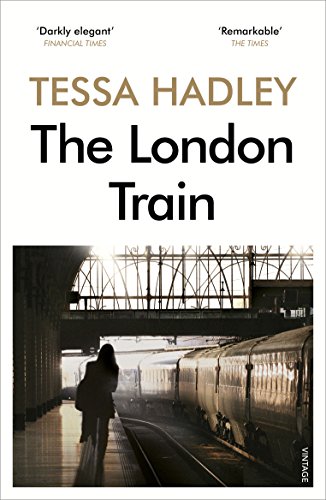
The London Train
Verlag: Vintage Publishing, United Kingdom, London, 2012
ISBN 10: 0099552264ISBN 13: 9780099552260
Buch
Paperback. Zustand: Very Good. From the Sunday Times bestselling author of Free Love and Late in the Day, discover a story of two lives stretched between two cities, two stories bound by the London train. Paul sets out in search of his eldest daughter Pia, who has gone missing somewhere in London. At first he thinks he wants to rescue her, but as time passes he is drawn deeper into the excitements of the capital, and a life lived in jeopardy, he forgets his own way home. In the opposite direction, Cora is moving back to Cardiff, to the house she inherited from her parents. She is escaping her marriage and the disappointments of her London life. And then she receives a telephone call to say that her husband has disappeared. 'She has such great psychological insights into human beings, which is rare. She is one of the best fiction writers writing today' Chimamanda Ngozi Adichie. The book has been read, but is in excellent condition. Pages are intact and not marred by notes or highlighting. The spine remains undamaged.
Mehr Angebote von anderen Verkäufern bei ZVAB
Neu ab EUR 11,24
Gebraucht ab EUR 0,94
Mehr entdecken Softcover
-
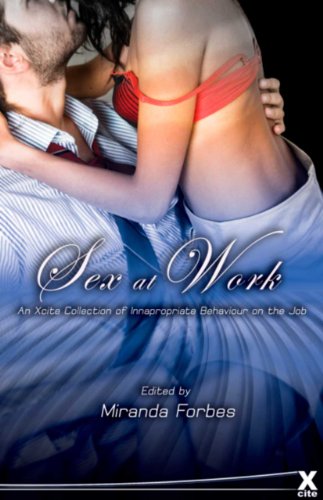
Sex at Work: An Xcite Collection of Inappropriate Behaviour on the Job: Twenty sexy stories that give a new meaning to job satisfaction.: 9 (Xcite Best-Selling Collections)
Verlag: Headline Publishing Group, United Kingdom, 2011
ISBN 10: 1907016570ISBN 13: 9781907016578
Buch
Paperback. Zustand: Good. Twenty sexy short stories that give a new meaning to job satisfaction . From encounters with the boss to affairs with colleagues or forbidden liaisons with clients, these stories revolve around all manner of workplace relationships and environments. There are orgies at the office, frisky fun at the factory and even tales of a tailor shop which provides that extra special customer service. Kingmaker by Justine Elyot The day after the election, Ms Saffron finds herself in a unique position holding the balance of power. If her rivals want to win, they must woo her but both are surprised at just how literally she takes the concept of getting into bed with another party. Who will make her the best offer? Which of her suitors will she make king? Freedom of the Breast by Landon Dixon The first brassiere had been patented six years earlier, in 1913, consisting of little more than two silk handkerchiefs and some pink ribbon. Milky Matthews had taken that basic breast-cupping premise and set sail with it, in an effort to ensure a snug and sexy fit for big-breasted women. He worked 16 hours a day, seven days a week, driven by the burgeoning demand for his big tit bras. Until, one day, Milky meets a beautiful, busty member of the Freedom of the Breast Movement, who demands total tit emancipation for women, unfettered boobs for all. Shes seeking Milkys support, while hes seeking release of a different kind. Cardboard by Kay Jaybee When, during a passionate encounter, Pia tells her courier boyfriend Owen, of how aroused the aroma of cardboard makes her, and of all the kinkily submissive things shed like to experience on a pile of boxes, his lack of response makes her think he hasnt heard her. It is a total surprise to Pia when, weeks later, Owen guides her into the middle of a deserted delivery depot, staring at a vast bed of cardboard boxes. Stripped, her wrists bound with parcel tape, Pia quickly realises Owen had taken in every word of her deepest desire after all . will the reality live up to her fantasies? Employees Only by Angel Propps Sometimes to get ahead in your career you have to start off at the bottom, or on the bottom. In Employees Only, a beautiful and ambitious employee is pitted against her sexy and lust-driven employer in a kinky girl-on-girl tale that proves that sometimes paying the cost to be the boss is incredibly hot. Jumping the Gun by Zee Kensington Its the sultriest night of the year, and the air conditioning is on the fritz. The only thing that can make this female tattoo artist any hotter is an after-hours job with sexy rockabilly hunk Travis. But, is he trying to get on her good side to scam some free ink, or is he genuinely looking to make a connection? Whatever his reason, shes still going to take what she wants, and get a hell of a lot more than overtime pay out of the deal. Productivity by K D Grace Under the careful supervision of his unorthodox management consultant, a stressed company CEO learns a hands-on technique guaranteed to up productivity. Angelines Atelier by Izzy French Angeline, a tailoress in Paris, awaits her first client. When Monsieur Legrand arrives his face is familiar, and he recognises her too as the girl he watched her pleasuring herself while he was measured for tailcoats by Angelines father. Now Monsieur Legrand finds Angeline alone he wants to see more of her. Knowing she has been a voyeur in the past, he punishes her for her boldness and depravity. Once he has derived his pleasure, it is Angelinas turn to take control. Will Monsieur Legrand play her game? Buzz Cut by Rachel Kramer Bussel Everyone wants a job that theyre passionate about and, after discovering his love and lust for all things hair, Doug has truly found his calling in the hairdressing trade. The only problem is keeping a handle on his arousal during work hours, but then in walks Rosemary and its love from the very first snip. But will Rosemary feel the same way? The Gothic Supplement by Emma Lydia Bates Being tied to her desk literally isnt as exciting for Addy as it used to be. But working for the Gothic Supplement of HOTgirls magazine, surrounded by whips, chains and velvet drapes, its pretty much par for the course. That is until, escaping her desk one day, shes seduced by a handsome stranger setting up a photo-shoot and its further from the world of the Gothic Supplement than Addy ever dreamed. Doctor Perrone and the Spank Master by J J Monroe Devoting all her energies to the creation of a machine so wicked it is guaranteed to put a smile on even the dirtiest girls lips, Doctor Perrone creates the Spank Master 2.0 the ultimate in sexual self-gratification. But now it needs testing and who better to test it then its creator, the delectable Miss Perrone? Buckle up and prepare for the wildest of rides, especially when a co-worker has his own personal modifications to road test. Eva Perrones evening is about to turn a whole lot kinkier! Tropical Paradise by Velvet Tripp Ellie has an adventurous nature, played out in the tropical house of the zoo where she works. Her lover, Sam, who looks after the big cats, is equally daring. They meet after work for a steamy hedonistic night of lust among the exotic flora and fauna. Ellies fantasies are about to become a reality in more ways than one! Just Like Your Father by Sommer Marsden Elis taking over for his dad, which means getting his oversized chair, his office and his luscious assistant. Carlene is all calm and curves and smarts and she know just how to calm a frazzled mans nerves. Elis starting to think its good to be boss . The Salon Sensual by J Troy Seate Instead of the usual shampoo and trim, come in to Judys and Barbies Salon Sensual for something truly unique. They are a couple of hardworking gals who are waiting to give a deluxe cut and to provide exotic services to a select few. But be warned, once inside their salon, you may never want to leave for their kinky snips and clips both satisfy the customer and applauds the fun a.
-
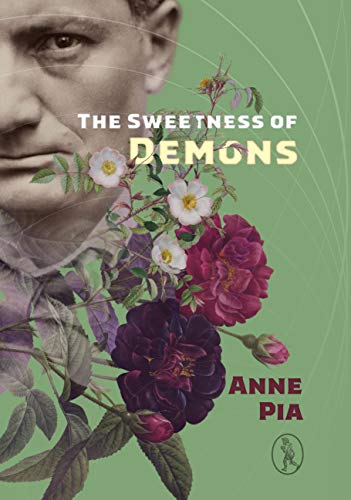
The The Sweetness of Demons
Verlag: Vagabond Voices, United Kingdom, Isle of Lewis, 2022
ISBN 10: 1913212327ISBN 13: 9781913212322
Buch
Paperback. Zustand: Very Good. Anne Pia's responses to Baudelaire's poetry is not only emotional and intellectual but also linguistic. It comes from her profound love for France's language and culture, particularly when it looks beyond nationhood. As she writes in her passionate and illuminating introduction, [Baudelaire] luxuriates and furiously dismisses. He rages and yet he speaks soft words. He is tender. He yearns, aches and seductively persuades. A creator of vivid visuals and sublimely evocative music, a conjuror of mist, soft light and of exotic scents, a sculptor and a weaver of tapestry and texture through a mere interplay of words and skilful verse and stanza, Baudelaire - whether jubilant or bitter - is never light-hearted, always honest, intense, disturbing. The challenge Pia set herself was to recreate some of this powerful mix in our English language, which has perhaps ceased to look for inspiration beyond itself since it became so dominant. And she has succeeded in this challenge quite remarkably, drawing the reader into the intimacy of her own intellectual and artistic journey with deep European roots. In this volume we have published the original French poems Pia has chosen and her poetic responses in English, along with her literal translations of the originals. It is a bold move in a language not of its time, which demands our engagement. The book has been read, but is in excellent condition. Pages are intact and not marred by notes or highlighting. The spine remains undamaged.
-
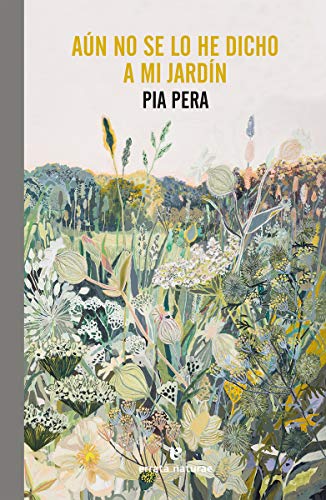
Aún no se lo he dicho a mi jardín (El Pasaje de los Panoramas, Band 16)
Verlag: Errata Naturae Editores, 2021
ISBN 10: 8417800743ISBN 13: 9788417800741
Buch
Gut/Very good: Buch bzw. Schutzumschlag mit wenigen Gebrauchsspuren an Einband, Schutzumschlag oder Seiten. / Describes a book or dust jacket that does show some signs of wear on either the binding, dust jacket or pages.
-
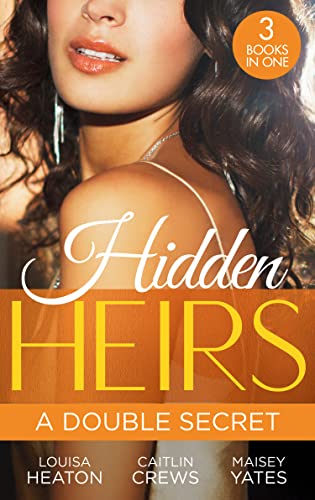
Hidden Heirs: A Double Secret
Verlag: HarperCollins Publishers, United Kingdom, Richmond, 2023
ISBN 10: 0263318532ISBN 13: 9780263318531
Buch
Paperback. Zustand: Very Good. A lot can change in one year Midwife Freya has stuck to night shifts after she was injured in an acid attack. But a hospital costume ball offers her the chance to hide her scars and enjoy a passionate encounter with a handsome stranger. Leaving her pregnantwith twins! Desert prince Jameel fought hard for his medical career, and hell fight for kind, courageous Freya and their babies too! For one passionate night, in a strangers arms, Pia had felt beautiful and freefree of being the lonely, overlooked heiress to her familys millions. Then Pia learns shes carrying the Crown Prince of Atilias twins! Ruthless Ares is determined to claim his secret heirs, but he wont cant promise Pia more. And Pias secret? Shes falling inescapably in love with her dark-hearted Prince On New Years Eve, Queen Tabitha refusing to live in a loveless marriage asks her husband for a divorce. But anger erupts into passion, and when Tabitha flees the palace, shes carrying King Kaiross heir! Discovering her secret, Kairos kidnaps his wife and against the backdrop of his secluded island paradise proves that desire has gone unsated between them for too long. The book has been read, but is in excellent condition. Pages are intact and not marred by notes or highlighting. The spine remains undamaged.
-
Taschenbuch. Zustand: Neu. Druck auf Anfrage Neuware - Printed after ordering - Pre-University Paper from the year 2016 in the subject English Language and Literature Studies - Literature, grade: 1,9, , language: English, abstract: This text examines similarities and differences of the figures of Sherlock Holmes as he appears in the novels by Arthur Conan Doyle and in their BBC television adaptation 'Sherlock'.Plaid hat, pipe in the mouth and a magnifying glass in hand - this is today's image of the master-detective Sherlock Holmes. To be honest, Sir Arthur Conan Doyle's Holmes has never disappeared from our lives. And then there is the TV-channel BBC, which brought the hero into the televisions of twenty-first-century. Is this possible Is the probably most famous crime character from the Victorian age survivable in London now Work the legendary stories by Sir Arthur Conan Doyle today, too Has Sherlock the instinct for the current high-tech-criminology I like to answer these questions in the following elaboration. First there will be a summary of Doyle's books and then a presentation of some TV-episodes will be given. At the end a comparison will bring the juxtaposition. Enjoy the track down for a historical hero in the modern civilisation! 20 pp. Englisch.
-

Taschenbuch. Zustand: Neu. Druck auf Anfrage Neuware - Printed after ordering - Studienarbeit aus dem Jahr 2008 im Fachbereich Politik - Politische Theorie und Ideengeschichte, Note: 1,7, Friedrich-Schiller-Universität Jena, Sprache: Deutsch, Abstract: 'Im Vergleich mit Denkern wie Hobbes, Rousseau oder Marx ist er der modernste, da er das politische, philosophische und ökonomische Weltbild des bürgerlichen Zeitalters wie sonst keiner geprägt hat.' John Locke (1632-1704), englischer Philosoph, Psychologe und Pädagoge, beschäftigte sich unter anderem mit der Begrenztheit des menschlichen Denkens, sowie mit den Problemen der politischen Freiheit und des religiösen Friedens. Seine politische Theorie veränderte die Welt, er argumentierte gegen den Absolutismus und entwickelte die Theorie eines freien Staates, der durch einen Vertrag mit freien Bürgern entsteht und Gewaltenteilung praktiziert. 'He is perhaps best described as an independent, free-moving intellectual, aware as others were not of the direction of social change.' 'Locke begründete das liberale Weltbild und hat damit das Entstehen der revolutionären Verfassungen Frankreichs und der USA beeinflusst.' Diese Arbeit wird am Beispiel der amerikanischen Unabhängigkeitsbewegung zum Ende des 18. Jahrhunderts untersuchen, inwieweit Lockes Vertragstheorie Einfluss auf das politische Denken einzelner Bevölkerungsgruppen im Aufbruch einer Revolution genommen hat. Kann man den Zustand der Kolonialherrschaft Englands über die 13 amerikanischen Kolonien mit dem des kriegerischen Naturzustandes bei John Locke vergleichen Wenn ja, war dann Lockes Ansatz zur Befreiung aus dem Naturzustand die Lösung für die Probleme der amerikanischen Siedler und der Anstoß zur Unabhängigkeitsbewegung.
-

Multiple Iago - The Character and Motives of Iago in Shakespeare's Othello
Verlag: GRIN Verlag, 2008
ISBN 10: 3640157494ISBN 13: 9783640157495
Buch
Taschenbuch. Zustand: Neu. Druck auf Anfrage Neuware - Printed after ordering - Seminar paper from the year 1999 in the subject English Language and Literature Studies - Literature, grade: 1,0, University of Dusseldorf 'Heinrich Heine' (Anglistisches Institut), course: Shakespeare's Romeo and Juliet and Othello, the Moor of Venice, language: English, abstract: IntroductionThere has been a long critical debate about the figure of Iago in Shakespeare`sOthello and especially about his motivation.Most complex of all for actors and critics is the Iago problem. This villain is much more dangerous than Cinthio`s. He not only betrays the Moor and the Captain (Cassio); he injures everyone in his vicinity.How can so evil a man be plausible How can he win the confidence of so apparently noble a man as Othello And more important, what is his motivation Why should any man hurt others so much Is he simply a dramatic mechanism A symbol of the devil The devil himself Or is he in fact a good man who has been provoked to revenge by wrongs done him Was he unfairly denied promotion by Othello Cuckolded by him By Cassio Finally, how can a character who does so much wrong involve audiences so deeply in his fate The controversy has produced many different views and, rereading them, one could get the impression that Iago has become a real person with real traits of character and that he is responsible for what he has 'done', and some critics withdraw more and more from the original text. Therefore any consideration of Iago`s or any other character refers to his 'character' as a stage personage in Shakespeare`s Othello.After seeing the bulk of literature written on the character of Iago, one tends to agree with Adamson:So many critics over the years have made so much sense (not to mention nonsense) of Iago that one naturally hesitates to dig over the plot again.Criticism on Othello is very diverse. Following are a few examples of the manifold interpretations of Iago`s character.
-

Taschenbuch. Zustand: Neu. Druck auf Anfrage Neuware - Printed after ordering - Seminar paper from the year 2002 in the subject English Language and Literature Studies - Literature, grade: 1,0, University of Dusseldorf 'Heinrich Heine' (Institut für Anglistik und Amerikanistik), course: Elizabethan Stage Villains - Shakespeare and Marlowe, language: English, abstract: 'Marlowe's Jew of Malta is a most puzzling play' in different respects. Firstly, there is the question of its genre: It is the one play of Marlowe's that strains most obviously against its apparent classification as a tragedy. Secondly, there are many different readings of the play. Is The Jew of Malta analogically a 'serious farce', a 'comedy of evil', a 'tragic farce'or plainly an 'ambiguous sort of drama' 3 Furthermore, a question which has often been raised, is, whether the text we have today is corrupt, and if it was written by someone else from the second act onwards. The reason behind all those questions and the play's ambiguity seems to be the protagonist Barabas. His character, one could argue, is not easy to analyze, nor is his motivation or disposition, as this is what was the focus of analysis in the past. The difficulty in explaining this character might result from different common suggestions what 'kind of protagonist' he is or what his dramatic function might be respectively. Thus Barabas is a conglomerate of stereotypes - as Jew, devil, Machiavel, and a dramatic persona fulfilling different narrative and conventional functions - as villain, Vice and protagonist, etc. The three most frequent characterizations are to be considered: the Vice figure, the stereotyped Jew and the stage Machiavel. While the Vice and the stereotyped Jewishness are often mentioned merely as aspects of Barabas's character, the Machiavellian is the most common and distinctive interpretation. For the sake of completeness the aspect of Machiavellianism is discussed very briefly in chapter 2, but a more detailed discussion of the topic follows in part 3 and 4 of this paper. It will be analyzed in the following respects: the stage Machiavel, Marlowe's use of Machiavelli as a dramatis persona in the prologue, and the influence of Machiavelli's writings on The Jew of Malta respectively. A closer examination of the cultural background of Elizabethan thought and the life and works of the person Niccoló Machiavelli has to precede these considerations. A literary work is always part of its cultural background, and it is at least debatable whether it is valid to apply today's standards to a drama written in Elizabethan times.A textual analysis of the prologue which I regard as being essential for my argument will follow this necessary consideration of the background.
-
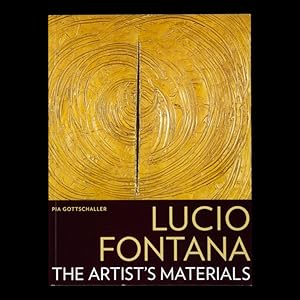
Lucio Fontana : the artist's materials
Anbieter: Douglas Stewart Fine Books, Armadale, VIC, Australien
Bewertung:

Pia Gottschaller ; with scientific analysis by Narayan Khandekar, Lynn F. Lee, and Daniel P. Kirby. Los Angeles : Getty Conservation Institute, [2012]. Octavo, illustrated wrappers, pp. vii, 144. Fine copy. "Lucio Fontana (1899-1968) is widely regarded as one of the most influential and innovative post-World War II Italian artists. Best known for his tagli--slashed, mostly monochromatic canvases--Fontana fashioned a remarkably multifaceted ?uvre that encompasses architecture, sculpture, and ceramics, as well as painting. In his quest to expand the vocabulary of his art, Fontana subjected the pictorial surface of his paintings to a remarkable assortment of punctures, gashes, and slashes, as well as adornments of glass fragments, glittering aluminum flakes, and sand. This richly illustrated book, the third in the Getty Conservation Institute's Artist's Materials series, presents the first technical study in English of this important painter. Initial chapters present an informative overview of Fontana's life and work. Subsequent chapters examine the nine major cycles of work on canvas that constitute his most important achievement, focusing on the physical genesis of these landmark paintings: How did Fontana's philosophical concerns influence his choice of materials? Once he had settled on an aesthetic concept, what precise means did he use to realize it? Did physical constraints imposed by the material force him to adjust his concepts? In considering these questions, this book seeks to illuminate how Fontana's material choices over the course of his career fit into the gradual evolution of idea into form"--Provided by publisher.
-

Post WWII Era Letters
Verlag: Bordighera, 1955
Anbieter: Between the Covers-Rare Books, Inc. ABAA, Gloucester City, NJ, USA
Verbandsmitglied: ABAA ESA ILAB IOBA
Bewertung:
Unbound. Zustand: Very Good. Three post-WWII typewritten letters, two photographs, and financial paperwork of Italian businesswoman and a Communist hostage, Pia Batchelder. Very good with tiny tears, creasing, and some rust offsetting from staples and paperclips. A compelling first hand account of an Italian woman who sacrificed herself to "the Reds" in exchange for her husband's freedom only to find out that he had spent the time during her incarceration being unfaithful and spending her money on other women. In May of 1945 Pia Batchelder gave herself in exchange for her American husband, George, to the Communists under Josip Broz Tito. They were frequent travelers and most likely found themselves prey to the communists around Yugoslavia who were collecting "enemies of the state.especially social democrats, members of the bourgeoisie, nationalists, fascist Ustaae insurgents, anti-communist Chetniks and Western-oriented regime critics and intellectuals." George was several years older than Pia and at 60 she knew he wouldn't last long in the camp. She writes, in broken English, of her ordeal to her stepson, Kenneth, in September of 1955; "So I sat from the 15 of May 1945 until the 1st of December 1945, in a hole in the Earth "death cell" waiting to be hung every night; without light or air, and hardly any food, until I could not walk two steps without falling unconscious. Lost 65 pounds. Just the same that the communists are the most murderous people, they did not kill me because I was sitting for him." The purpose of this letter, which she states she has been reluctant to write, is because during her captivity and after George was having numerous affairs and spending the couple's money, most of which belonged to Pia, on these other women. "When I came to the world again I was a living skeleton full of wound, in all this time of my hell, George was waiting in Triest consoling himself with missus Luisa Tesser, who was sure I would never come out.that was his thanks for sacrifice." She composed three letters, two to Kenneth making him aware of the situation and requesting help with the recovery of her assets; and one to George telling him she has had enough and includes a list of her financial records and all the money that is owed to her. "It is below my dignity to stand further a situation like that and be laughed at by everybody who knows about the facts." In her letter to George she writes, "I gave myself to the reds in order to liberate you from the prison because I knew that you are going to lose your life like all the men lost it who were with you in prison.I was 7 months in a death cell waiting to be hang for you." She ends this particular note with, "Now my dear I am going to behave as I should have behaved all along and I will try to make of you a real man.I write you because you run and do not want to hear, but you have to face the things you did, because you can't cancel them." An intriguing testimony of a woman going above and beyond her marital duties and asserting herself at a time when society often required that women remained mute on such topics.
-
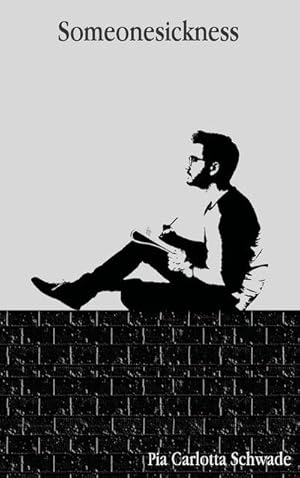
Taschenbuch. Zustand: Neu. Druck auf Anfrage Neuware - Printed after ordering - avoir le mal de quelqu'un(phr.) intensely missing someone so much it literally makes you sick; 'someonesickness' on the model of 'seasickness'Avery tries to accommodate to her new life as a college student and finding the love of her life, River. But since he has Asperger's Autism, obstacles have to be eluded. Join this heart-throbbing debut-novel that leaves you breathless. 236 pp. Englisch.
-

Please, mum, no more pills
Verlag: Books On Demand, 2018
ISBN 10: 8743001505ISBN 13: 9788743001508
Buch
Taschenbuch. Zustand: Neu. Druck auf Anfrage Neuware - Printed after ordering - Benjamin starts to take Ritalin to treat ADHD symptoms at age four. We follow Benjamin for 15 years, as he experiences worsening of symptoms, psychoses, more medication to get better, forced treatment, until he finally meets a psychiatrist, that is able to help him withdraw from psychiatric drugs.The book was written in the hope of creating debate about the way we use psychiatric drugs. Do we consider potential harms thoroughly enough What happens during polypharmacy Is it even ethically sound to do forced treatment 148 pp. Englisch.
-

Cerebral Aneurysms : Advances in Diagnosis and Therapy
Verlag: Springer Berlin Heidelberg, 2011
ISBN 10: 3642671659ISBN 13: 9783642671654
Buch
Taschenbuch. Zustand: Neu. Druck auf Anfrage Neuware - Printed after ordering - Microsurgery has brought about important changes and progress in the treatment of cere bral aneurysms in recent years. Only 12 years ago McKissock, one of the most experienced surgeons in the treatment of aneurysms pompared the results of operative and nonoperative treatment. He found that mortality and morbidity of cerebral aneurysms was not significantly affected by whether the patients have been operated upon or not. This view is held by many neursurgeons, and was confirmed by results of the Co-operative Study in 1969. In the review on treatment of aneurysms in Progress in Neurological Surgery in 1969, techniques such as encasement with plastic compounds, piloinjection, stereotactic copper or electric thrombosis and metallic thrombosis and profound hypothermia in anaesthesia were listed. In general, these techniques now seem to be of little more than historical interest. Progress in recent yeats has been so enormous that one may perhaps gain the impreSSion that the main problems in the treatment of aneurysms have been solved and that there are no more to be surmounted. This is dangerous and complacent thinking, such as Lord Moynihan indulged in during the thirties. For this reason we thought that the time had come to assemble a group of experts who could discuss the various unsolved and contro versial problems of aneurysm surgery in the friendly and relaxed atmosphere of a 'work shop'.
-
The Green Fingers of Monsieur Monet
Verlag: Royal Academy of Arts, 2016
ISBN 10: 1910350346ISBN 13: 9781910350348
Buch
Zustand: New. Including facts about Monet, this book tells the story of Monet and his garden: his arrival the country clothes he wore the bright Japanese prints he collected how the Impressionist artist painted outdoors, rain or shine the thousands of seed-packets he.
-
12/2013, Schulferien
Verlag: Oldenbourg
Anbieter: Antiquariat Artemis Lorenz & Lorenz GbR, Leipzig, Deutschland
Bewertung:
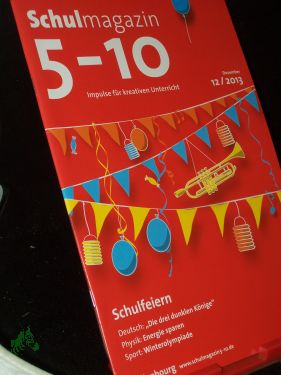
Zustand: Gut. Beiträge in dieser Ausgabe Das volle Leben Schul fei ern aus kon struk ti vis ti scher Sicht Kers ten Reich, Meike Kri cke --- Das Ver ständ nis oder der Zu gang zu schu li schen Fes ten ist ganz un ter schied lich ge wich tet auf Sei ten der Be tei lig ten: Ei ni ge as so zi ie ren mit ihnen zum Bei spiel die För de rung des Ge mein schafts sinns oder einer Schul kul tur. Für an de re stel len sie eher läs ti ge Zu satz ar beits bau stei ne zwi schen Qua li täts ana ly se oder Ver gleichs ar bei ten und Kom pe tenz er war tun gen dar. Wel che Be deu tung und wel chen Sinn Schul fei ern und schu li sche Feste für das Ler nen und die. Die drei dunk len Kö ni ge Eine Ana ly se von Wolf gang Bor cherts Nach kriegs kurz ge schich te Gün ter Mensch --- Das Weih nachts fest nach dem zwei ten Welt krieg zeig te den Men schen da mals noch stär ker als der All tag, in wel cher Not sie waren. Diese Not den Schü le rin nen und Schü lern an einer li te ra risch be deut sa men Kurz ge schich te zu zei gen, ver tieft den emo tio na len Ein druck von der Furcht bar keit eines Krie ges. Die Mo dal ver ben Ein füh run gen, Be deu tung, Übun gen Wolf gang Klenck --- Mit Hilfe der Ver ben sol len, müs sen, kön nen, wol len, dür fen und mögen wird das, was mit dem In fi ni tiv aus ge sagt wird, mo di fi ziert. Diese Mo dal ver ben geben dem Verb eine zu sätz li che In for ma ti on und drü cken damit einen zu sätz li chen Sinn aus. Sie be stim men dabei die Mo da li tät zwi schen dem Sub jekt und dem Verb als Aus sa ge des Sat zes. Weih nach ten im Ma thel and Kniff li ge Auf ga ben und Rät sel Wal ter Czech --- Sich selbst stän dig mit ma the ma ti schen Pro ble men zu be schäf ti gen ist ein Ziel des Ma the ma tik un ter richts. Die fol gen den Ma te ria li en for dern un se re Schü le rin nen und Schü ler genau dazu her aus. Die Rät sel las sen sich je nach Thema in den Jahr gangs stu fen 5 bis 10 ein setz ten. In di vi dua li sier tes Üben im Eng lisch un ter richt In di vi du al Simp le Past Ex er cis es (Teil 1) Doris Bocka --- Um die Selbst ein schät zung in Bezug auf die Be herr schung der Fremd spra che und die Selbst ver ant wor tung von Schü le rin nen und Schü lern zu för dern, bie tet sich die Be ar bei tung von in di vi du el len Übun gen zum Simp le Past im Fremd spra chen un ter richt an. Un ter richt im an ti ken Rom Ko ope ra ti ves Ler nen Bir git La scho --- Die Schü ler und Schü le rin nen ler nen den Un ter richt zu Hause oder außer Haus durch einen Pri vat leh rer als zen tra le Be schu lungs for men für die Ele men tar bil dung und die Hö he re Bil dung im an ti ken Rom ken nen und be ur tei len die bei den Be schu lungs for men ver glei chend. Ich werde Le bens ret ter Un ter richts ein heit über Blut grup pen, Blut kreis lauf und Blut spen de (Teil 1) Dr. Dr. Wieb ke Su san ne Ho mann, Da nie la Blasing --- Blut ret tet Leben. Den Schü le rin nen und Schü lern soll be wusst wer den, dass viele Un fall op fer nicht über le ben wür den, wenn es nicht Men schen gäbe, die ihr Le-ben sele xier Blut spen de diens ten zur Ver fü gung stel len, um zu hel fen. En er gie spa ren Prak ti sche Tipps zur Re du zie rung von Heiz kos ten und Strom ver brauch Franz Mo ra wi etz --- Wie kön nen bei stei gen den En er gie kos ten die Um welt ent las tet, knap pe Res sour cen ge schont und Geld ge spart wer den? Die Schü le rin nen und Schü ler er fah ren an hand von rea len Ab rech nun gen und In fo ma te ri al, wie jeder einen Bei trag dazu leis ten kann. Win ter olym pia de Ein Sta tio nen be trieb Chris ti an Rein schmidt, Vicki Rein schmidt --- Im Fe bru ar 2014 haben sich bei den Olym pi schen Win ter spie len in Sot schi Win ter sport ler aus aller Welt in ver schie de nen Dis zi pli nen ge mes sen. Ei ni ge davon ver le gen wir als Sta tio nen be trieb in die Halle. Ge schick lich keit, Gleich ge wichts fä hig keit und Be we gungs ko or di na ti on wer den so spie le risch ge schult. In ter kul tu rell phi lo so phie ren wie geht das? Zum Bei spiel: Afri ka Jos Schnu rer --- Die Phi lo so phie be ginnt mit dem Stau nen, so cha rak te ri siert Aris to te les das Nach den ken über sich, die Mit men schen, die Exis tenz, die Welt. Und die Frage, was Phi lo so phie ist, wird schon immer, seit Men schen über sich selbst und den Sinn des Le bens nach den ken, un ter schied lich und kon tro vers be ant wor tet, nicht sel ten als An re gung und An wei sung dar über, wie es Men schen ge lin gen kann, ein gutes Leben zu füh ren. Die ver schie de nen Ver su che, Phi lo so phie und. In ter net re cher che: Karl der Große To des tag jährt sich zum 1200. Mal Bernd Kell ner --- Zur Wür di gung des 1200. To des ta ges des ers ten abend län di schen Kai sers des Mit tel al ters am 28. Ja nu ar soll die In ter net re cher che als Er gän zung einer mög li chen Un ter richts se quenz Karl der Große die nen. Die Schü le rin nen und Schü ler sol len neu gie rig auf die Per son Karls I. ge macht wer den. Dar über hin aus soll das sinnent neh men de Lesen trai niert und das ge ziel te Su chen im In ter net geübt wer den. gutes Exemplar, ordentlich Gern können sie Ihr Buch per Rechnung bestellen. Hardcover.
-
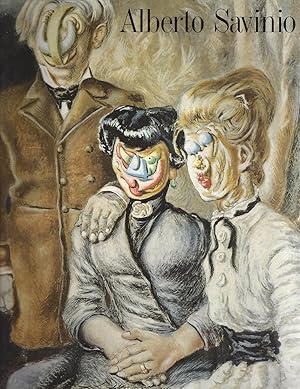
ALBERTO SAVINIO dipinti 1927-1952 - Lugano, Villa Ciani 24 ottobre - 1 dicembre 1991
Verlag: Milano: Electa, 1991, 1991
Anbieter: °ART...on paper - 20th Century Art Books, Lugano, Schweiz
Verbandsmitglied: ILAB
Bewertung:
Buch Erstausgabe
Soft cover. Zustand: Very Good. 1st Edition. Sm.4° - 191pp - Color & B/w reproductions. Exhibition Catalogue: Alberto Savinio (1891-1952) Italian writer, painter, musician, journalist, essayist, playwright, set designer and composer. He was the younger brother of 'metaphysical' painter Giorgio de Chirico. First edition, text in Italian language. Original pictorial boards. In Very good condition.
-
H BIA" im Recht der Papyri. ['H ßía; Hßia; He Bia; Hebia; H pía].
Verlag: Bonn, 1968
Buch Erstausgabe
Soft cover. Zustand: . 1st Edition. Octavo. Pp. 105, (1). Original printed stiff wrappers, shelf ticket, title in manuscript on spine, old stamp inside. In a very good condition. ~ FIRST EDITION. Original dissertation. 008-10.
-
H BIA" im Recht der Papyri. ['H ßía; Hßia; He Bia; Hebia; H pía].
Verlag: Bonn, 1968
Buch Erstausgabe
Soft cover. Zustand: . 1st Edition. Octavo. Pp. 105, (1). Original printed stiff wrappers. In fine condition. ~ FIRST EDITION. Original dissertation. 008-10.
-
Madonna Pia, and Other Poems. Volume One.
Verlag: Smith, Elder, and Co., London, 1848
Erstausgabe Signiert
Cloth. Zustand: Very Good. None (illustrator). First edition. The first edition of this collection of poetry, one of James Gregor Grant's chief literary works, Madonna Pia, signed by the author. Volume One of Two only. Very scarce in any state. The only presentation copy we can find. With the ink inscription to the title page, 'Henry Ogden, Esq: M.D. with the very sincere regards and respects of The Author'. With the armorial bookplate of Norman Dakeyne Newall to the front pastedown. Bound by Westleys & Clark, with a bookbinder label to the rear pastedown. James Gregor Grant, d.1875, was a poet, dramatist, novelist, and critic. He resided in Sunderland for the majority of his life. In a cloth binding. Externally, a little bumping, with a few marks. The front joint is starting. The front hinge is very slightly strained. Internally, firmly bound, with occasional handling marks or spots, and marginal light tidemarks from page 130 to the rear. Very Good. signed by author. book.
-
Detail 1-2/2008. THEMA: Bauen mit Beton.
Verlag: München, Institut für internationale Architektur-Dokumentation, 2008
Anbieter: Antiquariat Thomas Haker GmbH & Co. KG, Berlin, Deutschland
Verbandsmitglied: GIAQ
Bewertung:
Magazin / Zeitschrift
Standardeinband. 125 S. Guter Zustand. INHALT: Erhard An-He Kinzelbach/knowspace, Wien/Hamburg: Multimedia-Pavillon in Jinhua. wild bär architekten, Zürich: Wohnhaus in Zürich. Jordi Hidalgo + Daniela Hartmann, Barcelona: Wohnhaus im Vall de Bianya. Burkard Meyer Architekten, Baden: Wohn- und Geschäftshaus in Baden. ott architekten, Augsburg: Druck- u. Medienhaus, Augsburg. Barkow Leibinger Architekten, Berlin: Produktions- u. Verwaltungsgebäude in Freiburg. Toyo Ito & Associates Architectes, Tokio: Universitätsbibliothek in Tokio. Luciano Pia, Turin: Institut für Biotechnologie in Turin. Sprache: Deutsch Gewicht in Gramm: 675.
-
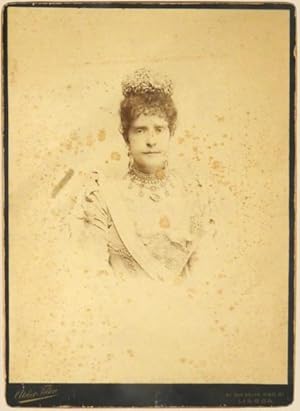
FOTOGRAFIA. RETRATO DE MARIA PIA DE SABOIA.
Anbieter: Livraria Castro e Silva, Lisboa, Portugal
Bewertung:
Fotografie
No binding. Zustand: Good. Atelier Fillon. Rua Serpa Pinto 87. Lisboa. S.d. [circa 1890] Prova fotográfica em papel albuminado montada sobre cartão de elevada espessura (3mm) de 40x30cm. Retrato em plano de busto de Maria Pia de Saboia, por volta dos seus 40 anos. Além do sumptuoso vestido e da fita que usa cruzada ao peito, é possível identificar diversas joias, nomeadamente: ? Uma combinação de um colar de diamantes e safiras ? oferecido pelo rei D. Fernando II a D. Maria Pia pela ocasião do seu casamento em 1862 ? com a grande safira Pollet ao centro, bem como dois pingentes de safira pendentes nos brincos. O medalhão e os pingentes foram elaborados por Adão Gottlieb Pollet em 1784 e adquiridos pela Coroa em 1879, tratando-se de três safiras azuis adornadas com pequenos diamantes sobre uma estrutura de ouro e prata. ? Um medalhão ao peito da Ordem de Nossa Senhora da Conceição de Vila Viçosa, desenhado pelo artista Jean-Baptiste Debret ? a ordem foi criada por D. João VI, ao ser aclamado Soberano do Reino Unido de Portugal, Brasil e Algarves, em 6 de Fevereiro de 1818. Dona Maria Pia era Grã-Mestra da mesma. ? Um grande diadema de desenho naturalista, com folhas e flores encomendado em 1886 na Leitão & Irmão, por ocasião do casamento do seu filho D. Carlos, a 22 de Maio desse ano. A peça, executada na oficina de José Cuadrillero, reutiliza os diamantes da antiga tiara de D. Estefânia (foram descravados de obra antiga 3170 diamantes e aplicados no novo diadema 2194). A tiara floral de D. Maria Pia está dentro de uma das maiores tendências da joalharia do séc. XIX. O rebordo do cartão, cortado na diagonal e com os cantos arredondados, encontra-se dourado, assim como a chancela do fotógrafo e a morada. Exemplar levemente desvanecido, com picos de humidade e um borrão (borracha?) à esquerda do busto. Maria Pia de Saboia (Turim, 1847 ? Nichelino, 1911) foi uma princesa italiana, esposa do Rei D. Luís I e Rainha Consorte de Portugal e Algarves de 1862 até 1889. Foi a segunda filha do rei Vítor Emanuel II da Itália e da arquiduquesa Adelaide da Áustria. Maria Pia ficou conhecida como «O Anjo da Caridade» e «A Mãe dos Pobres» por sua compaixão e causas sociais. Alfred Fillon (Roanne, 1825 ? Lisboa, 1881), francês emigrado em Portugal por razões políticas, foi uma das figuras mais importantes da fotografia portuguesa de oitocentos. Fixando-se em Portugal na década de 1850, Fillon tornou o seu estabelecimento fotográfico num dos mais destacados estúdios portugueses e tornar-se-ia numa referência para as casas fotográficas portuguesas. Nele se fizeram fotografar as mais importantes figuras da sociedade portuguesa do seu tempo, em particular os membros da família real. A sua ligação aos meios teatrais, enquanto fotógrafo do Teatro Nacional, trouxe-lhe enorme prestígio e muitas das fotografias de artistas foram publicadas na revista O Contemporâneo. De acordo com a chancelas deste cartão, Fillon teve um estúdio na Rua Serpa Pinto, N.º 87, Lisboa. 40x30cm. Photographic print on albuminated paper mounted on thick cardboard (3mm). Bust plan portrait of Maria Pia de Saboia, aged around 40. In addition to her sumptuous dress and the ribbon she wears crossed over her chest, several pieces of jewellery can be identified, including: - A combination of a diamond and sapphire necklace - given by King Ferdinand II to Maria Pia on the occasion of their wedding in 1862 - with the large Pollet sapphire in the centre, as well as two sapphire pendants hanging from the earrings. The locket and pendants were made by Adão Gottlieb Pollet in 1784 and acquired by the Crown in 1879. They are three blue sapphires adorned with small diamonds on a gold and silver frame. - A medallion on the chest of the Order of Our Lady of the Conception of Vila Viçosa, drawn by the artist Jean-Baptiste Debret - the order was created by King João VI when he was acclaimed Sovereign of the United Kingdom of Portugal, Brazil and the Algarves on 6 February 1818. Dona Maria Pia was its current Grand Master.- A large diadem in a naturalistic design, with leaves and flowers, commissioned in 1886 to Leitão & Irmão, on the occasion of her son Carlos" wedding on 22 May of that year. The piece, made in José Cuadrillero"s workshop, reuses the diamonds from Queen Estefânia"s old tiara (3170 diamonds were cut from old work and 2194 were applied to the new diadem). Maria Pia"s floral tiara is part of one of the biggest jewellery trends of the 19th century. The edge of the cardboard, cut diagonally and with rounded corners, is gilded, as are the photographer"s stamp and address. Slightly faded copy, with damp stains and a smudge (rubber?) to the left of the bust. Maria Pia de Saboia (Turin, 1847 - Nichelino, 1911) was an Italian princess, wife of King Luís I and Queen Consort of Portugal and the Algarves from 1862 until 1889. She was the second daughter of King Victor Emmanuel II of Italy and Archduchess Adelaide of Austria. Maria Pia became known as 'The Angel of Charity' and 'The Mother of the Poor' for her compassion and social causes. Alfred Fillon (Roanne, 1825 - Lisbon, 1881), a Frenchman who emigrated to Portugal for political reasons, was one of the most important figures in Portuguese photography in the 1880s. Settling in Portugal in the 1850s, Fillon turned his photographic establishment into one of the most prominent Portuguese studios and became a benchmark for Portuguese photographic houses. The most important figures in Portuguese society of his time were photographed there, particularly members of the royal family. His connection to the theatre scene, as a photographer for the National Theatre, brought him enormous prestige and many of his photographs of artists were published in the magazine O Contemporâneo. According to the information printed, Fillon had his studio in Rua Serpa Pinto, N.º 87, Lisbon. Referências/References: RUMSEY TEIXEIRA. (João Júlio) Uma tiara com 4000 diamantes: história e paradeiro da tiara de D. Estefânia, reconvertida por D. Maria Pia e v.
-
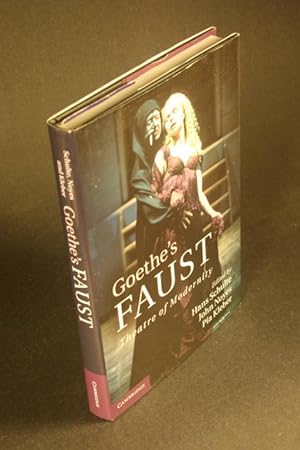
Goethe's Faust: Theatre of Modernity. Edited by Hans Schulte, John Noyes and Pia Kleber
Verlag: Cambridge: University Press, 2011, 2011
Kleber, Pia / Noyes, John K. / Schulte, Hans, ed. Goethe's Faust: Theatre of Modernity. Edited by Hans Schulte, John Noyes and Pia Kleber. Cambridge: University Press, 2011, xiii, 332pp., very good dust-jacket, very good black cloth. "Faust has been called the fundamental icon of Western culture, and Goethe's inexhaustible poetic drama is the centrepiece of its tradition in literature, music and art. In recent years, this play has experienced something of a renaissance, with a surge of studies, theatre productions, press coverage and public discussions. Reflecting this renewed interest, leading Goethe scholars in this volume explore the play's striking modernity within its theatrical framework. The chapters present new aspects such as the virtuality of Faust, the music drama, the modernization of evil, Faust's blindness, the gay Mephistopheles, classic beauty and horror as phantasmagoria, and Goethe's anticipation of modern science, economics and ecology. The book contains an illustrated section on Faust in modern performance, with contributions by renowned directors, critics and dramaturges, and a major interview with Peter Stein, director of the uncut 'millennium production' of Expo 2000" (rear jacket panel text). - CONTENTS: Pt. I. Modernity: 1. Faust - today Albrecht Schöne; 2. Mephisto and the modernization of evil Rolf-Peter Janz - 3. Mephisto is the devil - or is he? Peter Huber - 4. 'Schwankende Gestalten': virtuality in Goethe's Faust Ulrich Gaier - 5. Amnesia and anamnesis in Goethe's Faust Wolf-Daniel Hartwich - 6. Cagliostro and Saint-Simon in Goethe's Faust II Hans-Jürgen Schings - 7. Faust's blindness Eberhard Lämmert - 8. From Faust to Harry Potter: discourses of the centaurs Gisela Brude-Firnau - 9. Mistra and the Peloponnes in Goethe's Faust II Wilhelm Blum - 10. Goethe and the grotesque: the 'classical Walpurgis night' Angela Borchert - 11. Redefining classicism: antiquity in Faust II Ernst Osterkamp - 12. Mephisto, the angels, and the homoerotic in Faust II W. Daniel Wilson - Pt. II. Theatre: 13. Goethe's Faust: theatre, meta-theatre, tragedy Martin Swales - 14. Faust beyond tragedy: hidden comedy, covert opera Dieter Borchmeyer - 15. Theatricality and experiment: identity in Faust Jane Brown - 16. Rhetorical action: Faust between rhetoric, poetics, and music Helmut Schanze - 17. Directing Faust: an interview Peter Stein - 18. A contradictory whole: Peter Stein stages Faust Dirk Pilz - 19. Rethinking and staging Faust at the State Theatre Stuttgart, 2005/6 Jörg Bochow - 20. Strehler's Faust in performance Laura Caretti - Select bibliography. ISBN 9780521194648.
-
Pia desideria emblematis, elegiis & affectibus SS. Patrvm illustrata
Verlag: Vulguait Boëtius a Bolswert, Typis Henrici Aertssenii, Antwerp, 1624
Anbieter: James Cummins Bookseller, ABAA, New York, NY, USA
Bewertung:
Erstausgabe
First edition. First edition. Engraved allegorical title page, engraved coat of arms of Pope Urban VIiI, initial introductory enblem, and 45 leaves of engraved emblematic plates by Boëce van Bolswert; [32], 412, [3]. 1 vols. 8vo. First edition of the most popular spiritual love emblem book, which made the genre popular throughout Europe in the 17th century and beyond. By the end of the 18th century the Pia Desideria had been reprinted nearly 40 times in Latin, French, German, Spanish, Dutch, Polish, English, Danish, and Italian. This emblem book mixes tender messages of care with dire warnings to sinners, and while it is written in Latin, demanding a well-educated reader, it proved to be wildly popular. One of the keys of the popularity of this work are the emblematic designs of Boetius Adamsz. van Bolswert (ca. 1580-1633), each of which is accompanied by an explanatory caption. Born in Bolsward, Friesland, Boetius was a pupil of Abraham Bloemaert at Utrecht and went to Antwerp around 1618, joining the painter's guild in 1620. Boetius also worked in Brussels, where he met and was inspired by Pieter Paul Rubens. Herman Hugo (1588-1629), a Brussels Jesuit, was teacher at the Jesuit College in Antwerp and confessor of the Duke of Aerschot, with whom he went to Spain, where he was appointed army chaplain to Spinola. This book was used as a rhetorical example for students of Rhetoric at the Jesuit College at Brussels. Landwehr, Emblem & Fable Books 345 Contemporary vellum (slightly soiled). Preliminary leaves misbound Engraved allegorical title page, engraved coat of arms of Pope Urban VIiI, initial introductory enblem, and 45 leaves of engraved emblematic plates by Boëce van Bolswert; [32], 412, [3]. 1 vols. 8vo.
-
Å UVRES [Inscribed]
Verlag: La Jeune Parque, Paris, France, 1947
Anbieter: Second Story Books, ABAA, Rockville, MD, USA
Bewertung:

Erstausgabe Signiert
Softcover. Limited Edition: #738/4000. Octavo, 421 pages. In Very Good condition. Bound in publisher's printed beige wrap and glassine protective covering. Slight tearing to glassine along top and bottom edges. Beige spine is tanned with black lettering. Tanning to beige front and back covers with minor soiling and possible water damage to lower back cover near spine. Slight writing in pencil to top left corner of back cover. Small white sticker affixed to bottom of spine with the number '700.' Age-toning to textblock with tanning along side edge. Inscribed by Nadeau on half-title page. Shelved in Case 12. This is a collection of Sade's works selected by Nadeau featuring an essay on Sade's continued significance by Nadeau's colleague, Pascal Pia. Nadeau was a French writer and literary critic who was a member of the resistance during the occupation. Along with his writings on Sade and other significant literary figures, he wrote a seminal text about the history of surrealism. 1370636. Shelved Dupont Bookstore.
-
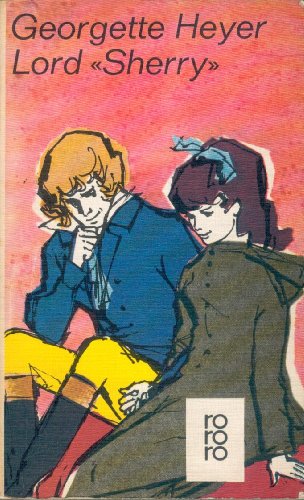
Lord "Sherry". Roman. (Deutsch von Pia von Hartungen) - rororo 910
Verlag: Rowohlt, 1979
ISBN 10: 3499109107ISBN 13: 9783499109102
Buch
Softcover. Zustand: guter Zustand. 5. oder spätere Auflage. 313 S., 19 cm, Papier altersbedingt etwas nachgedunkelt, keine Eintragungen, Buchblock gerade. Georgette Heyer (* 16. August 1902 in Wimbledon; ? 5. Juli 1974 in London; Aussprache: /???'??t 'he??/) war eine britische Schriftstellerin. Georgette Heyer hat in erster Linie historische Romane verfasst, die eine Auflage von mehreren Millionen erreichten. Bis 1972 veröffentlichte sie 57 Bücher, vor allem historische Liebesromane, die in der Zeit des Regency in England oder Frankreich spielen (Regency Romance). Sie zeichnen sich durch sehr gut recherchiertes Detailwissen über die damaligen Lebensumstände sowie durch schlagfertige Dialoge und plastische Charaktere aus. Daneben veröffentlichte sie ein Dutzend Kriminalromane und einige nicht ins Deutsche übersetzte Romane und Kurzgeschichten, die im 20. Jahrhundert spielen. Buch.
-

Kartoniert / Broschiert. Zustand: New. Guerra, Pia (illustrator). Über den AutorrnrnNicholas Harrison is a writer, actor, director, swordsman, fight director, playwright, and educator. As a professional actor and stunt performer in film and television, he has appeared in many popular films and series such.
-
HIROSHI SUGIMOTO - Catalogue designed ny Takaaki Matsumoto - Signed by H. Sugimoto
Verlag: Ostfildern: Hatje Cantz Verlang, 2010, 2010
Anbieter: °ART...on paper - 20th Century Art Books, Lugano, Schweiz
Verbandsmitglied: ILAB
Bewertung:
Buch Erstausgabe
Hardcover. Zustand: Fine. Zustand des Schutzumschlags: Fine. 1st Edition. 4° - 397pp - Color & B/w Photo-reproductions. Hiroshi Sugimoto (1948) Japanese photographer and architect. He leads the Tokyo-based architectural firm New Material Research Laboratory. First edition, in English language. The Book was designed by Takaaki Matsumoto. Original Binding and dust-jacket. In Fine condition.


![Bild des Verkäufers für Å UVRES [Inscribed] zum Verkauf von Second Story Books, ABAA](https://pictures.abebooks.com/inventory/md/md31603950477.jpg)